

Wet Drywall and Insulation: Can It Be Saved?
Drywall and insulation act like sponges. After a pipe leak, roof leak or flood, they can look fine on the surface while holding water inside, and wet drywall can start growing mold in 24 to 48 hours. Whether it can be saved depends on how long it has been wet, how much water it took on and what kind of water it was. Here's what to do first and how restoration professionals decide. (If the water is coming through the ceiling, see our water through the ceiling guide.)
Need help right now? Call MaxClean Restoration at 732-539-2942 Open 24/7 in Monmouth, Ocean and Middlesex counties. We're usually on site in about an hour near Freehold, and in about 2 hours in Lacey, Stafford, Barnegat and Little Egg Harbor.
Signs your drywall or insulation is wet
- Soft, crumbling or sagging drywall, or a wall that feels cool and damp
- Bubbling, peeling or stained paint and wallpaper
- Brown or yellow stains that spread or return after drying
- Baseboards or trim that are swelling, warping or pulling away
- A musty smell, even if you can't see water
- Drywall seams or nail heads that start to show through
- Wet insulation, which feels heavy and clumped, or water dripping from an outlet on that wall
Step by step: what to do
- Stop the source. Shut off the water at the main valve or fixture if a pipe is leaking, and have a roofer or window contractor cover any storm opening.
- Watch for electricity. If water is near outlets, switches, light fixtures or the panel, turn off power to that area at the breaker, but only if you can reach it without standing in water. If you're not sure, call an electrician.
- Take photos and video of the wet walls and damage, with the date and time, before you clean up. Your insurance company will want them.
- Move belongings and furniture away from the wet wall. Pull furniture a few inches off the wall and lift curtains out of the water.
- Ventilate if the weather allows. Run fans and open windows to move air. Run a dehumidifier if you have one.
- Don't count on the surface. A wall that feels dry to the touch can still be wet inside.
- Call a water damage restoration company. MaxClean checks drywall and insulation with moisture meters and thermal imaging and tells you what can be dried and what has to be removed: 732-539-2942.
- Report the damage to your insurance company and write down the claim number.
What NOT to do
- Don't paint or caulk over wet drywall or a stain. It traps moisture inside.
- Don't leave wet insulation in the wall. It stays wet for a long time and holds moisture against the framing.
- Don't poke holes or cut into a wall you suspect has mold. Opening it can spread spores through the house.
- Don't use a regular household vacuum on wet floors or walls.
- Don't wait to see if it dries on its own. Mold can start in 24 to 48 hours.
- Don't throw away damaged materials before they're photographed and documented.
When drywall can be dried and when it has to come out
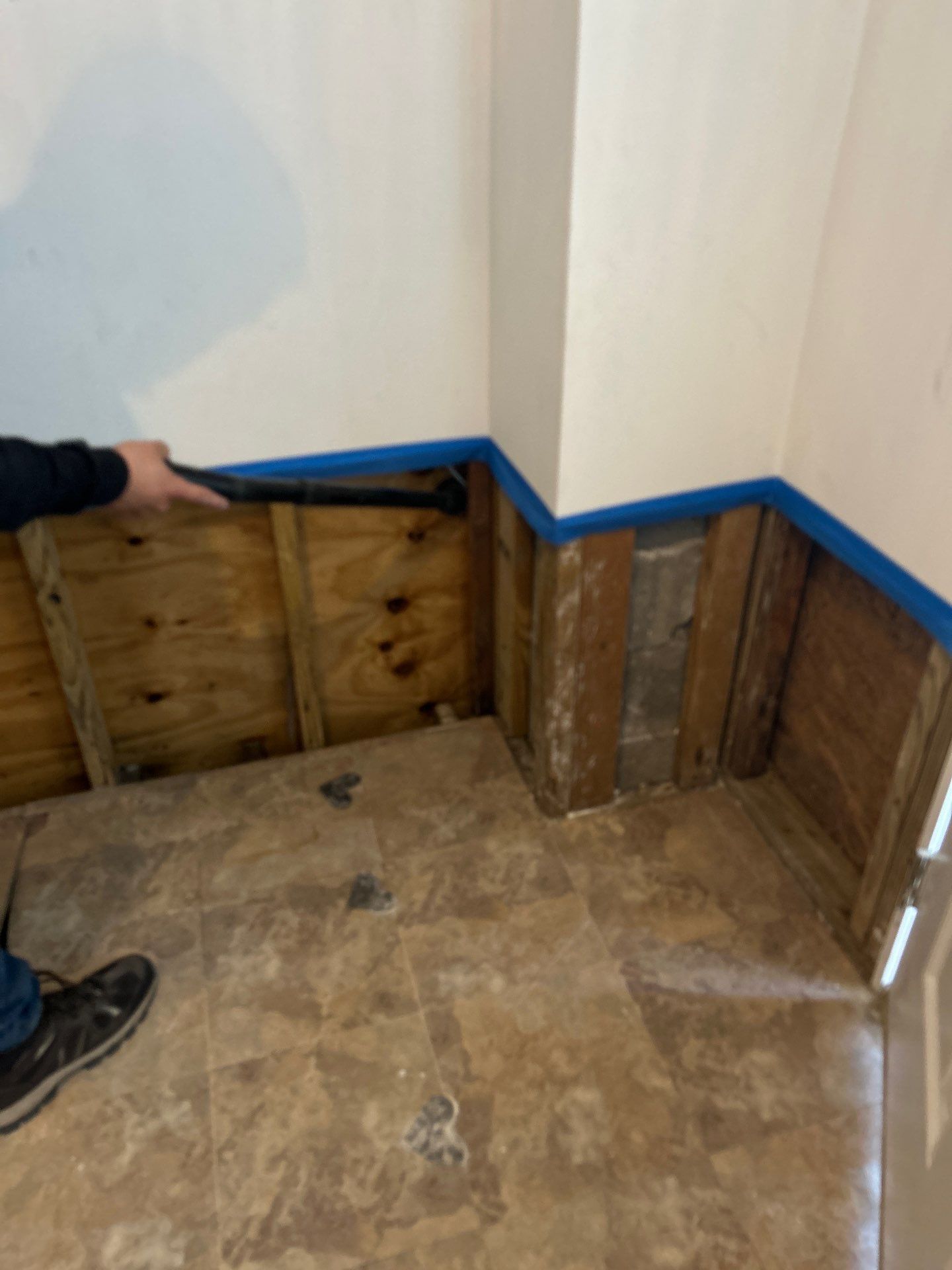
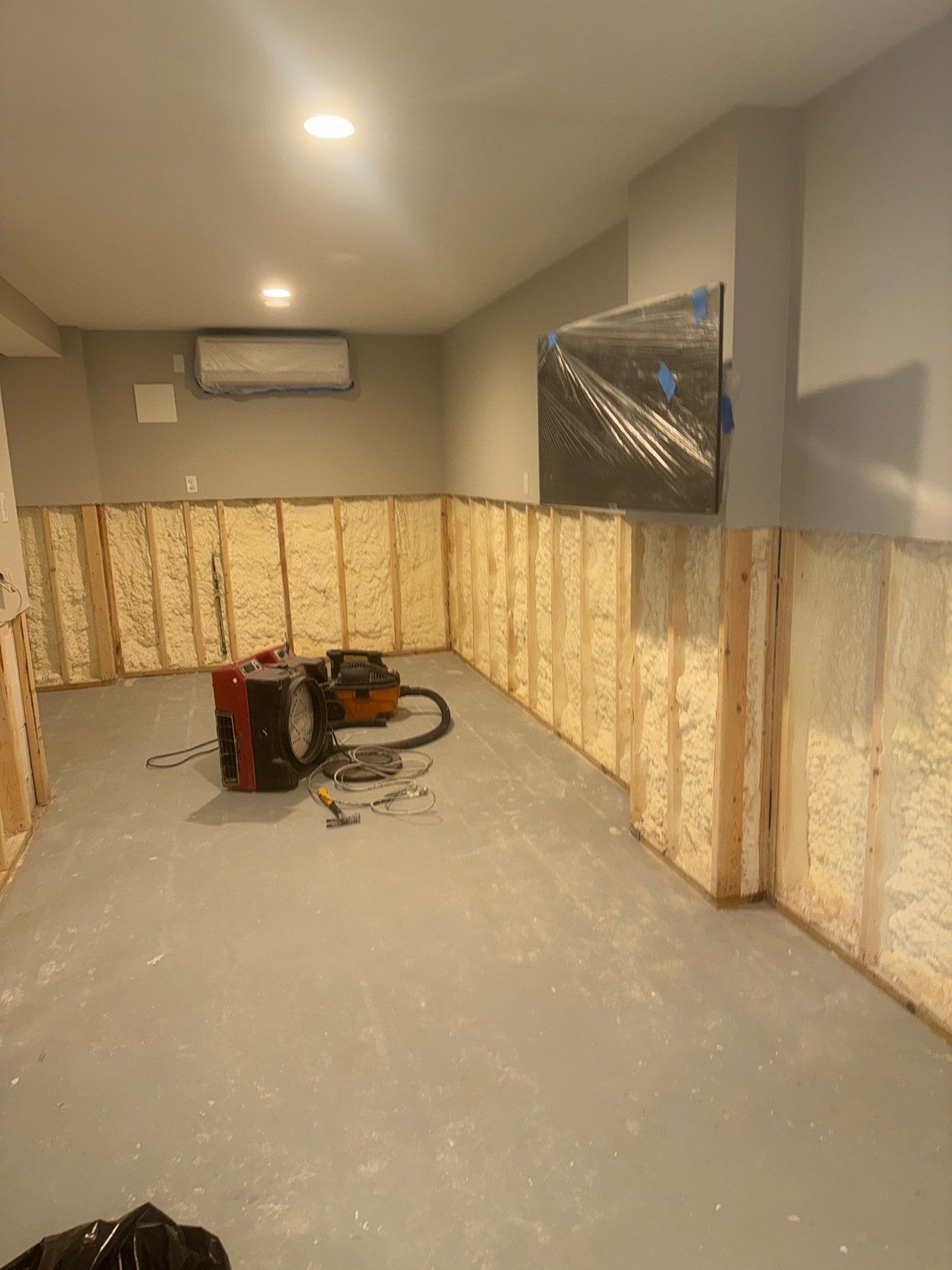
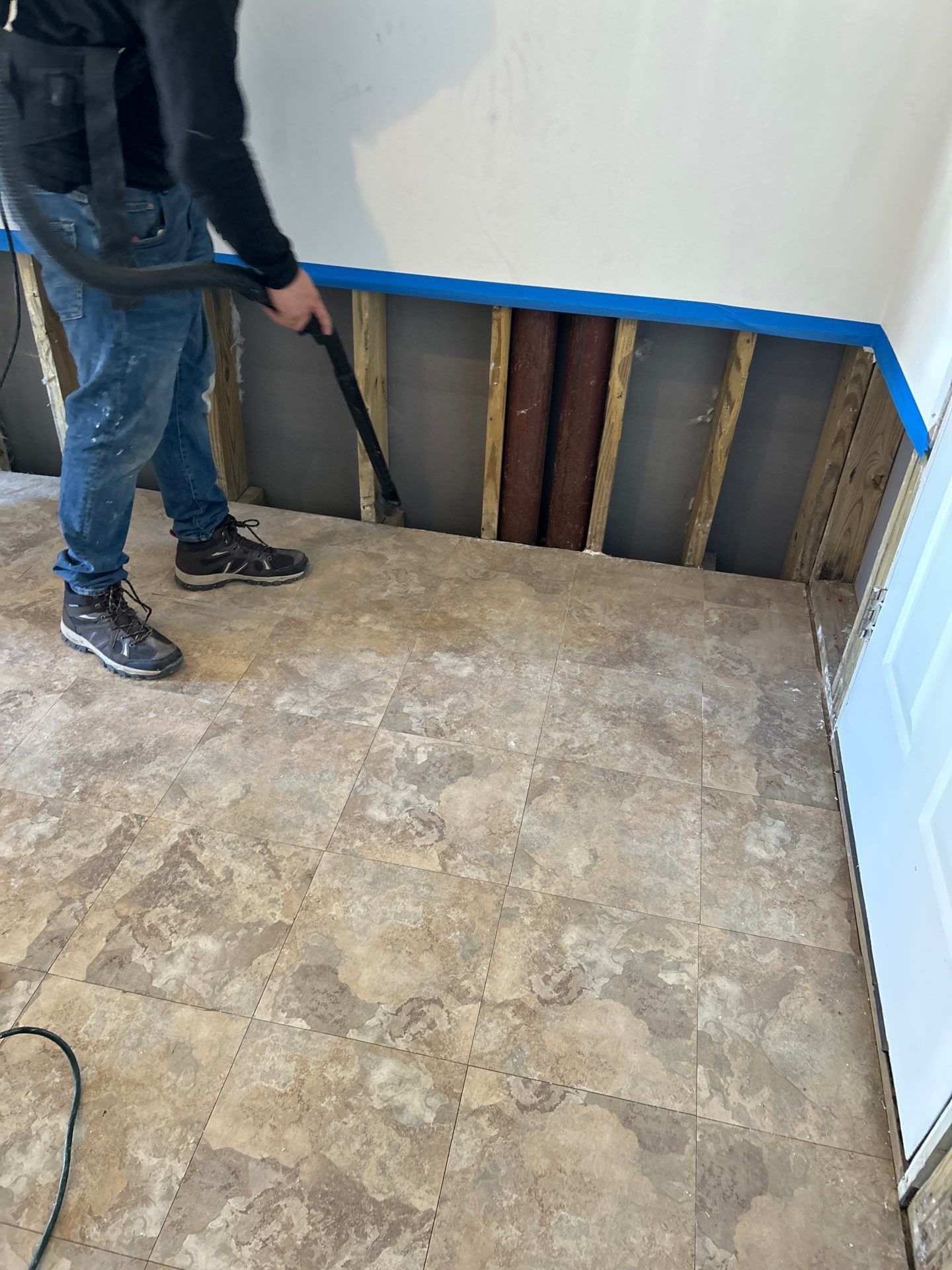
Drywall that was wet briefly with clean water, and is still firm, can often be dried in place. Drywall usually has to be removed if it has been wet for days, is soft, sagging or crumbling, shows mold, or was soaked by sewage or floodwater. Insulation is different from drywall: wet fiberglass or cellulose insulation is usually removed and replaced, because it's slow to dry and can hide moisture against the framing. Technicians often cut a clean, straight line a couple of feet above the wet line so repairs are neat and the framing can dry. See our guides to hidden or slow leaks and finding mold in your home.
How MaxClean handles wet drywall and insulation
- Finding the full extent: our IICRC-certified technicians use moisture meters and thermal imaging cameras to map where the water went inside walls, ceilings and floors.
- Documenting it: photos and moisture readings are taken before and during the work, so your adjuster can see what happened.
- Removing what can't be saved: soaked drywall, wet insulation and damaged baseboard are removed and bagged, with floors protected.
- Drying: air movers and dehumidifiers dry the structure, with moisture readings every day until the wet materials match dry materials elsewhere in your home, following the IICRC S500 standard.
- Mold remediation, if it's needed: the area is contained with plastic barriers and air filtration, moldy materials are removed, and the area is cleaned, following the IICRC S520 standard. Learn more on our mold remediation page.
- Rebuilding: when the structure is dry, MaxClean can handle the drywall, paint and trim repairs too.
Learn more on our water damage restoration page or our insurance claims page.
This guide is general information, not legal or insurance advice.
Printable checklist
Wet Drywall and Insulation: Checklist
- ☐ Water source stopped
- ☐ Power off to wet areas (only if the panel is safe to reach)
- ☐ Photos and video with date and time
- ☐ Furniture and belongings moved away from the wall
- ☐ Fans and dehumidifier running
- ☐ No painting, caulking or cutting into walls until confirmed dry
- ☐ Restoration company called to check moisture inside walls
- ☐ Insurance claim reported and number written down
- ☐ MaxClean Restoration 24/7: 732-539-2942
Frequently asked questions
Can wet drywall be saved? Sometimes. Firm drywall that got wet briefly from clean water can often be dried in place. Drywall that is soft, sagging, moldy or soaked by sewage or floodwater usually has to be removed.
How long until wet drywall grows mold? Mold can start growing in 24 to 48 hours, which is why fast drying matters.
Does wet insulation have to be replaced? Usually yes. Wet insulation dries slowly and holds moisture against the framing, so it's normally removed and replaced.
How do you check a wall for water without tearing it open? We use moisture meters and thermal imaging cameras to find wet areas inside walls, ceilings and floors, so only the damaged materials need to be opened up.
Does homeowners insurance cover water-damaged drywall? Policies vary, so check your policy or ask your agent, and report the damage as soon as you find it. We send the invoice to your insurance carrier on your behalf, but the invoice is still the homeowner's responsibility. That includes your deductible and anything your carrier doesn't pay.
Need help right now? Call MaxClean Restoration at 732-539-2942 Open 24/7 in Monmouth, Ocean and Middlesex counties. We're usually on site in about an hour near Freehold, and in about 2 hours in Lacey, Stafford, Barnegat and Little Egg Harbor.
Related guides: Hidden or slow leak · Water coming through the ceiling · Rain coming in through windows or walls · Wet carpet and padding · Found mold in your home · All guides
MaxClean Restoration, 11 Bannard Street, Freehold, NJ · IICRC Certified Firm · NJ HIC #13VH12188600 Open 24/7 across Monmouth, Ocean and Middlesex counties. Usually on site in about an hour near Freehold, and in about 2 hours in Lacey, Stafford, Barnegat and Little Egg Harbor.