

Water Coming Through the Ceiling: What to Do
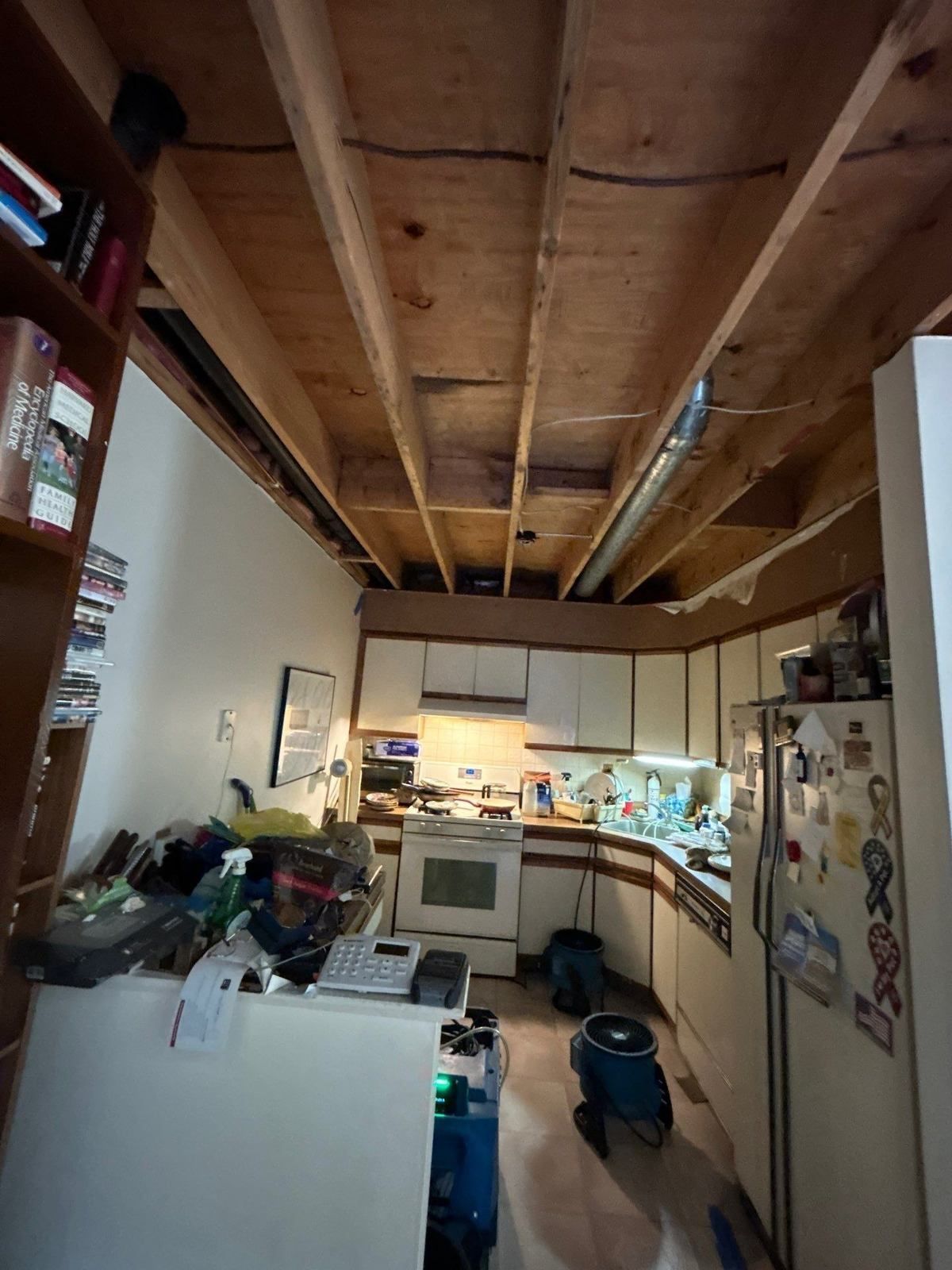
Water dripping from the ceiling, a brown stain that keeps growing, or water running out of a light fixture is scary, and it usually means water has been collecting above you for a while. When the room above is a bathroom, laundry room or kitchen, or there's a condo or apartment unit upstairs, the cause is usually a leaking toilet, tub, shower, supply line, washer or dishwasher. (If the water is coming from the roof, see our roof leak or ice dam guide.) Here's what to do.
Need help right now? Call or text MaxClean Restoration at 732-539-2942 · Text us Open 24/7 and usually on site within an hour in Monmouth, Ocean and Middlesex counties.
Step by step: what to do right now
- Get everyone out from under the wet ceiling. Wet drywall is heavy and a sagging or bulging ceiling can come down without warning. Keep kids and pets out of the room.
- Turn off power to the area at the breaker if water is near a light fixture, ceiling fan or outlet, but only if you can reach the panel without standing in water.
- Stop the water at the source.
- Your own upstairs bathroom or appliance: turn off the valve behind the toilet, under the sink, or behind the washer or dishwasher. Stop using the tub or shower above.
- Not sure where it's coming from? Shut off the main water valve for the house.
- A unit above you: knock on your neighbor's door and call your building manager, super or association's emergency line right away so they can shut off the water.
- Catch the water. Put buckets or containers under drips, and move furniture, rugs and electronics out of the way or cover them with plastic.
- Document everything with photos and video of the ceiling, the room below, and the bathroom or appliance above, before anything is cleaned or removed.
- Call a plumber to find and fix the leak, and call MaxClean at 732-539-2942 to find the hidden water and dry the ceiling, walls and floors.
- Report the damage to your insurance company and write down the claim number.
What NOT to do
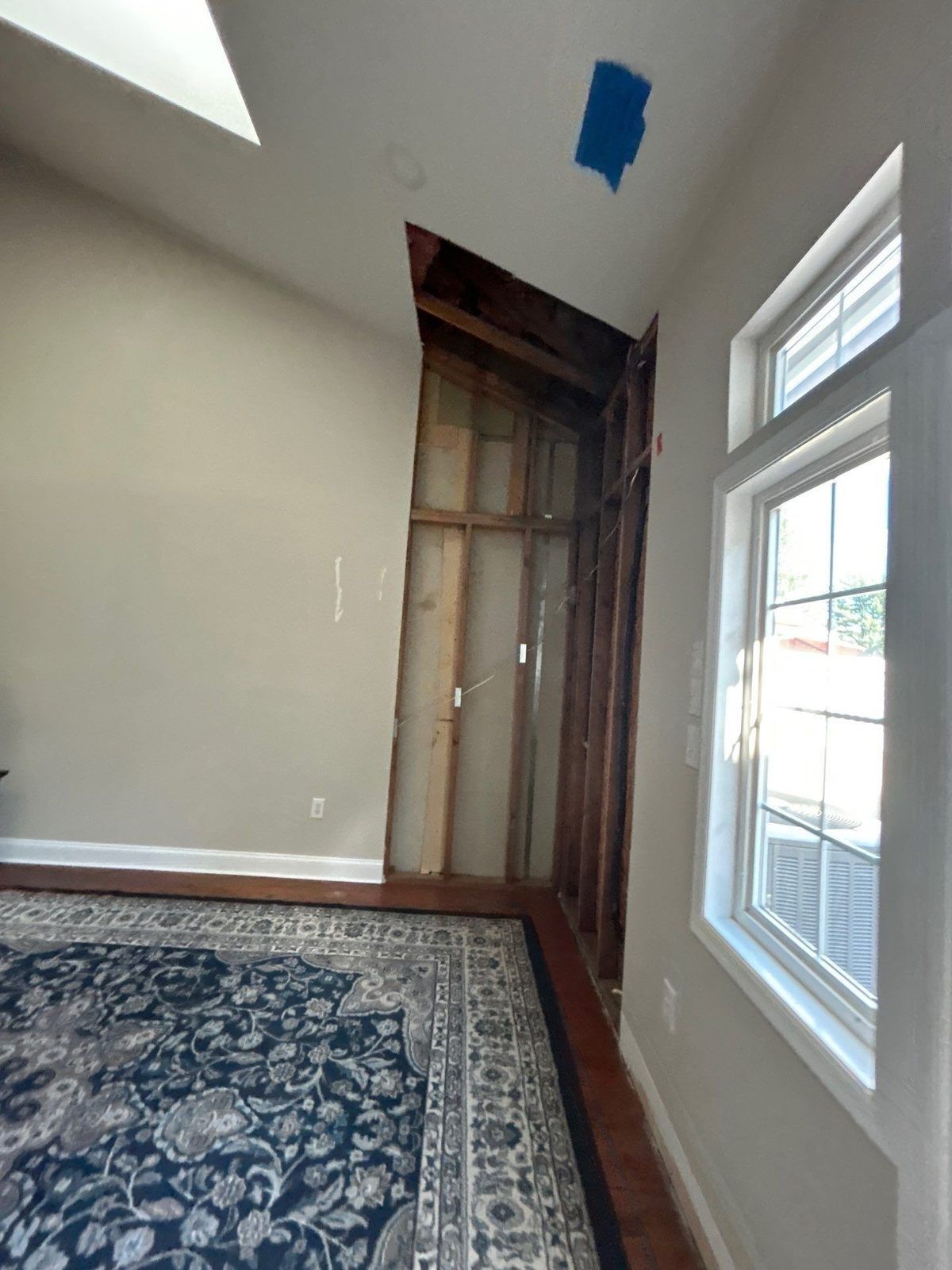
- Don't stand under a sagging or bulging ceiling, and don't poke holes in it yourself. Leave the room and call us.
- Don't turn on ceiling lights or fans if the ceiling is wet or sagging.
- Don't keep using the toilet, tub, shower or appliance above until the leak is found and fixed.
- Don't assume it's dry once the drip stops. Water soaks into insulation, drywall, framing and the floor above, where it can lead to mold.
- Don't paint over a water stain until the area has been checked and dried.
- Don't throw away a failed supply line, hose or part before it's photographed.
When to call a professional
- The ceiling is stained, bulging, sagging or dripping.
- Water came out of a light fixture or is running inside a wall.
- The leak may have been going on for a while, like a slow drip from a toilet or shower above.
- The water came from a toilet or drain line and may be contaminated.
- The water came from a unit above you and reached your ceiling, walls or floors.
- You notice a musty smell or new stains after the leak stopped.
Working with your insurance
We work directly with your insurance company and send the invoice to your carrier for you; you're responsible for your deductible and anything your policy doesn't cover.
In New Jersey, homeowners usually have the right to choose their own restoration contractor. We specialize in working with both homeowners and insurance companies to make sure the work is properly documented and covered, so your home gets back to its pre-loss condition.
Learn more on our insurance claims page or our water damage restoration page.
Printable checklist
Water Coming Through the Ceiling: What to Do: Checklist
- ☐ Everyone out from under the wet ceiling
- ☐ Power off to wet light fixtures (only if safe)
- ☐ Water shut off at the fixture, appliance or main
- ☐ Neighbor and building manager called (if it's from the unit above)
- ☐ Buckets under drips, furniture moved or covered
- ☐ Photos and video of the ceiling, room below and source above
- ☐ Plumber called
- ☐ Insurance claim reported and number written down
- ☐ MaxClean Restoration 24/7: 732-539-2942
Frequently asked questions
Will a wet ceiling dry out on its own? Usually not well. Water gets trapped in insulation, between the ceiling and the floor above, and inside walls, where it can stay wet long enough to grow mold. We use moisture meters and thermal cameras to find where the water went and dry it with commercial equipment, checking readings every day.
Does the whole ceiling have to come down? Not always. If the drywall is sagging, falling or soaked with contaminated water, that section usually has to be removed. Ceilings that got wet but are still solid can often be dried in place.
The leak came from the unit above me. Whose insurance company do I call? Start by reporting it to your own insurance company and asking how they want you to proceed. They can explain your options. We can't give legal advice, so if you have questions about who is responsible, ask your insurance agent or a qualified professional.
Who pays for water damage from an upstairs leak? Coverage depends on your policy, so check your policy or ask your agent. We work directly with your insurance company and send the invoice to your carrier for you; you're responsible for your deductible and anything your policy doesn't cover.
How can I tell where the water is coming from? Look at what's directly above the stain, like a toilet, tub, shower, sink, washer or dishwasher. Water can travel along joists and pipes before it shows up, though, so the leak isn't always right above the drip. A plumber can find the source, and we trace where the water spread.
Get ready before it happens: build a free emergency plan for your home (shutoff locations, emergency contacts, maintenance reminders) at plan.maxcleanrestoration.com.
Need help right now? Call or text MaxClean Restoration at 732-539-2942 · Text us Open 24/7 and usually on site within an hour in Monmouth, Ocean and Middlesex counties.
Related: water damage restoration · All Resource Center guides · Insurance claim help · Free home emergency plan
MaxClean Restoration, 11 Bannard Street, Freehold, NJ · IICRC Certified Firm · NJ HIC #13VH12188600 Open 24/7 and usually on site within an hour across Monmouth, Ocean and Middlesex counties.