

Roof Leak or Ice Dam: What to Do
A brown stain spreading across the ceiling, a drip near a light fixture, or water running down the inside of a wall usually means water is getting in from above. In New Jersey winters, a common cause is an ice dam: a ridge of ice at the roof edge that traps melting snow, which then backs up under the shingles and into the attic, ceilings and walls. Whether it's an ice dam, storm damage or worn flashing, here's what to do.
Need help right now? Call or text MaxClean Restoration at 732-539-2942 · Text us Open 24/7 and usually on site within an hour in Monmouth, Ocean and Middlesex counties.

Safety first
- Stay out from under a sagging or bulging ceiling. Wet drywall is heavy and can come down without warning. Keep everyone out of that room.
- Turn off power to the area at the breaker if water is near light fixtures, ceiling fans or outlets and you can reach the panel without standing in water.
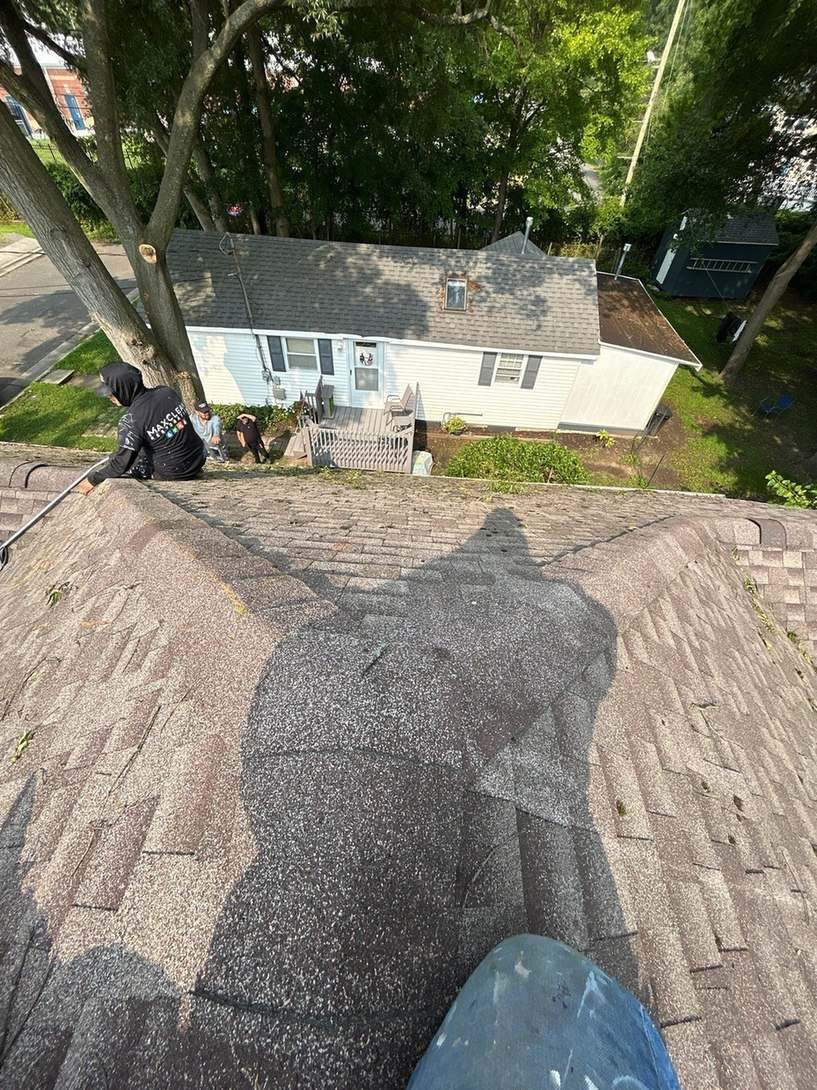
- Don't go on the roof. Icy, wet or storm-damaged roofs cause serious falls every winter.
- Watch for slippery floors where water is dripping.
What to do right now
- Catch the water. Put buckets, pots or a plastic bin under drips, with a towel inside to stop splashing.
- Move furniture, electronics and rugs out of the way, or cover them with plastic sheeting.
- Check the attic if you can get there safely by a proper ladder or stairs. Look for wet insulation, dripping nails and wet roof decking. Don't step between the joists.
- Take photos and video of the ceiling, walls, attic and the outside of the roof from the ground. If there's an ice dam, photograph the ice along the roof edge and any icicles.
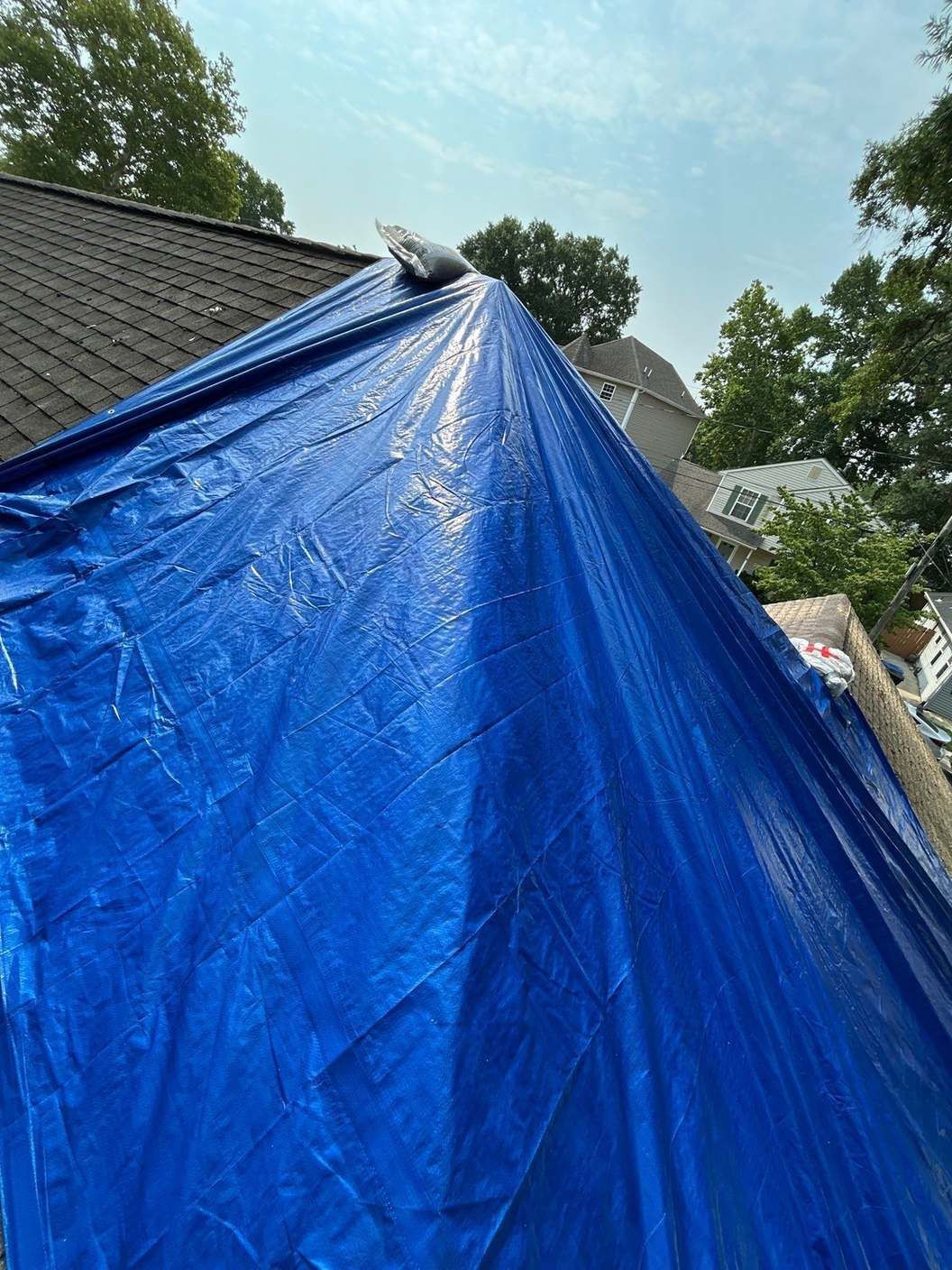
- Call MaxClean at 732-539-2942 to dry the inside of the house, and a roofer for the roof repair. We can also arrange emergency tarping when the roof is open.
- Report the damage to your insurance company and write down the claim number.
- Keep receipts for buckets, tarps, hotel stays and anything else you buy because of the leak.
What NOT to do
- Don't climb on the roof or lean a ladder against an icy gutter.
- Don't chip at an ice dam with a hammer, ax or shovel. You'll damage the shingles and gutters and can get hurt.
- Don't use rock salt on the roof. It can damage shingles, metal and plants below.
- Don't poke holes in a sagging ceiling yourself. Leave the room and call us.
- Don't turn on ceiling lights or fans in the wet area.
- Don't assume it dried once the drip stops. Insulation and wall cavities can stay wet for weeks and grow mold.
What MaxClean does
- Stops more water from getting in with emergency roof tarping when there's an opening (we coordinate with your roofer for the permanent repair).
- Finds all the water. We use moisture meters and thermal imaging to see how far the water traveled through the attic, ceilings and walls.
- Removes what can't be dried, like soaked insulation or ceiling drywall that is sagging or falling, following the IICRC S500 standard.
- Dries the structure with commercial dehumidifiers and air movers, and checks moisture readings every day until materials are back to normal.
- Checks for mold in the attic and wall cavities.
- Documents everything with photos and moisture logs for your claim.
- Rebuilds ceilings, walls, insulation and paint. See what to expect during reconstruction.
Learn more on our water damage restoration page.
Working with your insurance
We work directly with your insurance company and send the invoice to your carrier for you; you're responsible for your deductible and anything your policy doesn't cover.
In New Jersey, homeowners usually have the right to choose their own restoration contractor. We specialize in working with both homeowners and insurance companies to make sure the work is properly documented and covered, so your home gets back to its pre-loss condition.
For general steps to follow after any loss, see the insurance claim process, step by step or our insurance claims page.
When to call a professional
- A ceiling is stained, bulging, sagging or dripping.
- Water is running inside a wall or around a window or light fixture.
- Attic insulation is wet.
- You see ice dams form on your house every winter.
- There's a musty smell upstairs or in the attic after a leak.
Printable checklist
Roof Leak or Ice Dam: Checklist
- ☐ Everyone out from under sagging ceilings
- ☐ Power off to wet light fixtures (only if safe)
- ☐ Buckets under drips, furniture moved or covered
- ☐ Photos of ceilings, walls, attic and roof edge (from the ground)
- ☐ Restoration company called for drying
- ☐ Roofer called for the repair
- ☐ Insurance notified and claim number written down
- ☐ Receipts saved
- ☐ MaxClean Restoration 24/7: 732-539-2942
Frequently asked questions
What causes ice dams? Heat escaping from the living space warms the roof and melts snow. The water runs down to the colder roof edge and refreezes, building a ridge of ice that traps more meltwater behind it. That water can work its way under the shingles.
How do I prevent ice dams? The long-term fix is keeping the roof cold: good attic insulation, sealed air leaks from the house into the attic, and proper attic ventilation. Clean gutters before winter, and after heavy snow, a roof rake used from the ground can pull snow off the lower edge. Ask a roofer or insulation contractor about your home.
Can I just paint over a ceiling water stain? Not until the leak is fixed and the materials are fully dry. A stain often means wet insulation or framing above it. Painting too soon can trap moisture and lead to mold.
Does MaxClean fix roofs? We handle emergency tarping and everything inside the house: drying, mold prevention and rebuilding. We coordinate with a roofer for the permanent roof repair.
How long does it take to dry out after a roof leak? Most rooms take a few days with professional equipment, depending on how much water got in and what it soaked. We take moisture readings every day and don't stop until materials are back to normal.
Need help right now? Call or text MaxClean Restoration at 732-539-2942 · Text us Open 24/7 and usually on site within an hour in Monmouth, Ocean and Middlesex counties.
Related guides: Storm prep for NJ homeowners · Tree on your house · Attic and crawlspace moisture · What happens on day 1 of water mitigation · All guides
MaxClean Restoration, 11 Bannard Street, Freehold, NJ · IICRC Certified Firm · NJ HIC #13VH12188600 Open 24/7 and usually on site within an hour across Monmouth, Ocean and Middlesex counties.