

Tree Fell on Your House: What to Do
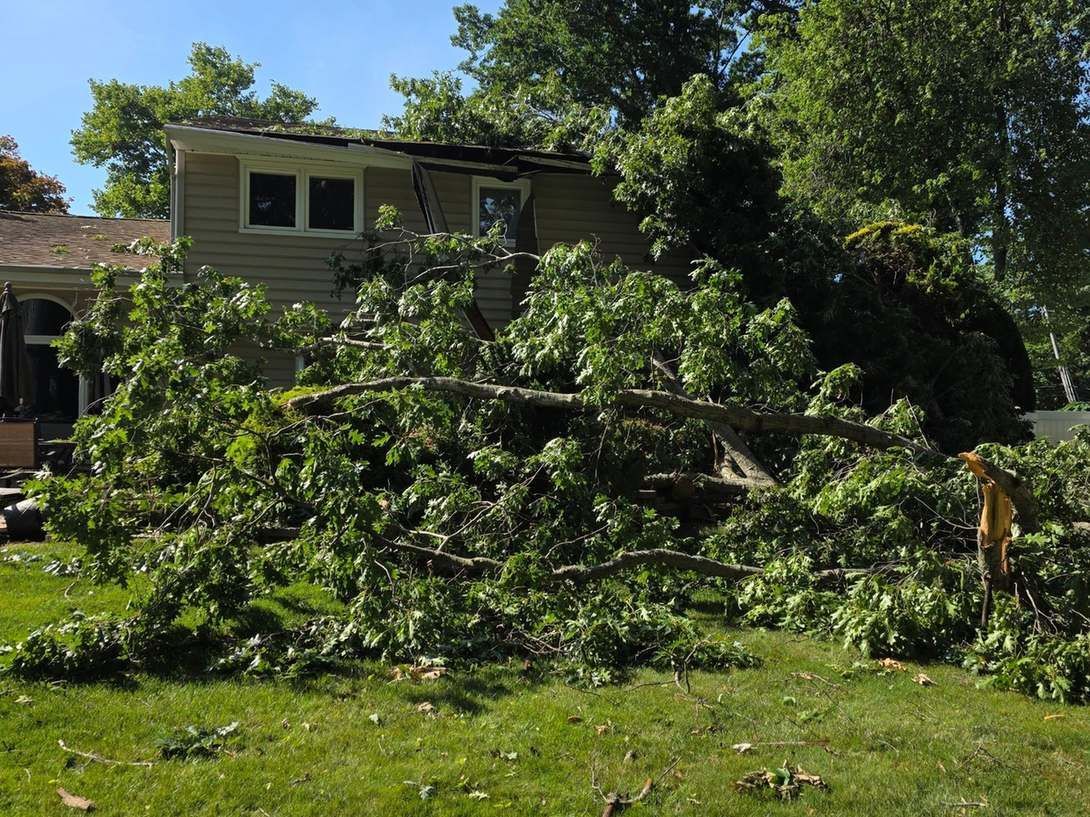
Nor'easters, hurricanes, summer thunderstorms and heavy snow bring down trees across New Jersey every year. When one lands on your house, it's frightening, and the danger isn't over when the tree stops moving. Power lines, a weakened roof and shifting limbs can all hurt someone. Here's what to do, in order.
Need help right now? Call or text MaxClean Restoration at 732-539-2942 · Text us Open 24/7 and usually on site within an hour in Monmouth, Ocean and Middlesex counties.
Safety first
- Get everyone out of any room the tree hit, and out of the house entirely if you hear creaking, see cracks spreading, or the roof or ceiling is sagging.
- Stay far away from downed power lines, and anything touching them, including the tree, fences, puddles and gutters. Assume every wire is live. Call 911 and your electric utility.
- Smell gas? Leave right away and call 911 or your gas utility from a safe distance.
- Call 911 if anyone is hurt or trapped, or if the house looks unstable.
- Keep kids and pets away from the tree and debris. Limbs can shift or roll without warning.
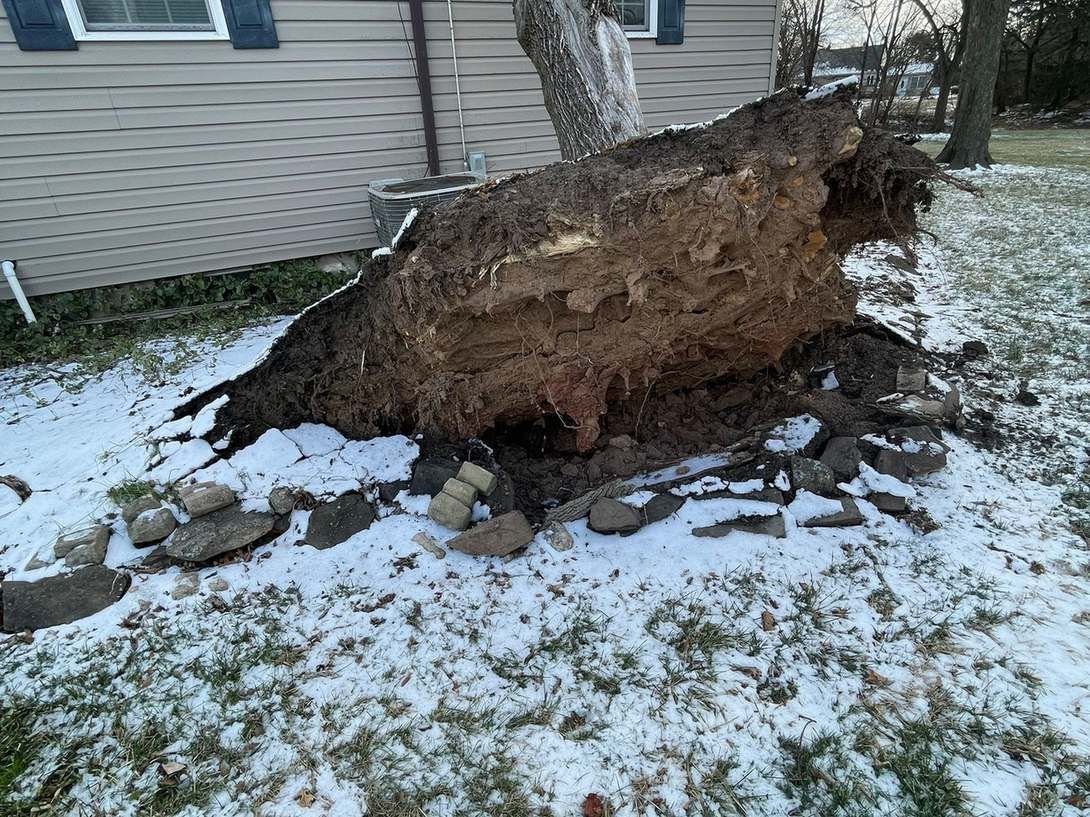
What to do right now
- Make sure everyone is safe and accounted for.
- Report downed lines to your electric utility, and ask them to cut power to the house if wires are involved.
- Take photos and video from a safe distance: the tree, where it hit, the roof, inside rooms, and any damage to cars, fences or other property.
- Call MaxClean at 732-539-2942. We're open 24/7 and usually on site within an hour. We coordinate tree removal from the structure, tarp and board up openings, and start drying any water that got in.
- Call your insurance company to report the damage and write down the claim number.
- Protect belongings in rooms that are safe to enter. Move them away from openings or cover them with plastic.
- Keep receipts for tarps, a hotel, meals and anything else you pay for because of the damage.
What NOT to do
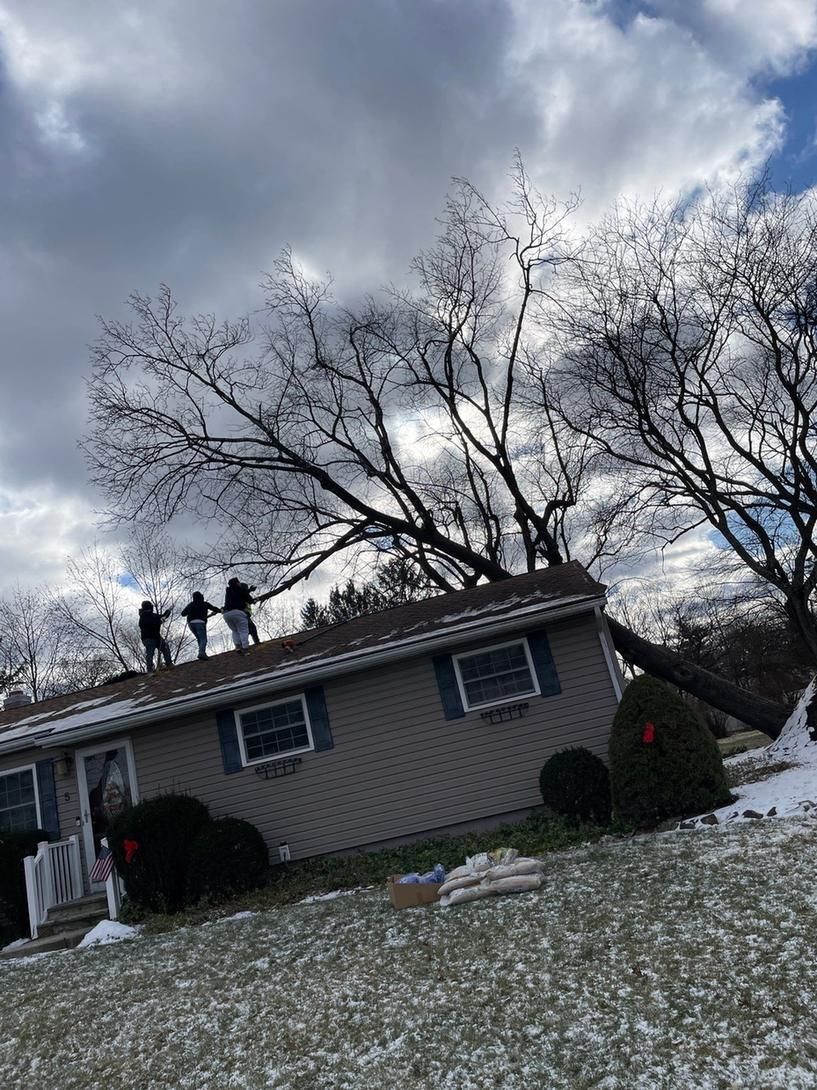
- Don't try to cut the tree off the roof or climb onto the roof. Trees resting on a house are under tension and can spring, roll or drop in unpredictable ways.
- Don't use a chainsaw near power lines, or at all if you're not trained.
- Don't go into rooms with a sagging or cracked ceiling.
- Don't sleep in the house if a structural expert or the fire department hasn't said it's safe.
- Don't ignore the rain. An open roof lets water into insulation, ceilings and walls fast.
- Don't throw away damaged materials or belongings before they've been photographed.
What MaxClean does
- Assesses the site for hazards and coordinates with the utility if wires are involved.
- Coordinates safe tree removal from the house with the right crew and equipment for the job.
- Tarps the roof and boards up broken windows, doors and wall openings to keep out weather and intruders.
- Dries out water damage following the IICRC S500 standard: extraction, removing soaked insulation and drywall, commercial dehumidifiers and air movers, and daily moisture readings.
- Documents everything with photos and measurements for your claim.
- Rebuilds the roof framing, ceilings, walls and finishes. See what to expect during reconstruction.
Learn more on our emergency tree removal page.
Working with your insurance
We work directly with your insurance company and send the invoice to your carrier for you; you're responsible for your deductible and anything your policy doesn't cover.
In New Jersey, homeowners usually have the right to choose their own restoration contractor. We specialize in working with both homeowners and insurance companies to make sure the work is properly documented and covered, so your home gets back to its pre-loss condition.
For general steps to follow after any loss, see the insurance claim process, step by step or our insurance claims page.
When to call a professional
Any time a tree or large limb hits the house, especially when:
- The roof, a wall or a window is broken open.
- Water is coming in, or rain is on the way.
- Ceilings are cracked, sagging or wet.
- A limb is hanging or resting on the roof or near wires.
- You're not sure whether the structure is safe.
Printable checklist
Tree on Your House: Checklist
- ☐ Everyone out of damaged rooms and accounted for
- ☐ Clear of downed lines; 911 and electric utility called
- ☐ No gas smell (or left the house and called 911)
- ☐ Photos and video from a safe distance
- ☐ Restoration company called for removal, tarping and drying
- ☐ Insurance notified and claim number written down
- ☐ Receipts saved
- ☐ MaxClean Restoration 24/7: 732-539-2942
Frequently asked questions
Who should I call first when a tree falls on my house? Call 911 if anyone is hurt, wires are down or you smell gas. Then call a restoration company that can coordinate removal and protect the house (MaxClean is open 24/7 at 732-539-2942), and report the damage to your insurance company.
Can I stay in my house after a tree falls on it? Only if the damaged area can be closed off and the rest of the house is safe, with no sagging ceilings, structural cracks, gas smell or electrical problems. If you're not sure, don't stay. The fire department or a structural professional can help you decide.
How fast can the roof be covered? We're usually on site within an hour for emergencies. Once the tree is safely off the roof, we tarp and board up the openings to keep out weather.
Should I remove the tree myself before the adjuster comes? No. Cutting a tree off a house is dangerous work for trained crews. Take plenty of photos, call us, and report it to your insurance company. We document the damage before and during removal.
How can I tell if a tree near my house is risky? Warning signs include dead or hanging branches, cracks or cavities in the trunk, mushrooms at the base, leaning that's getting worse, and limbs over the roof. Have a certified arborist look at trees close to your home, ideally before storm season.
Need help right now? Call or text MaxClean Restoration at 732-539-2942 · Text us Open 24/7 and usually on site within an hour in Monmouth, Ocean and Middlesex counties.
Related guides: Storm prep for NJ homeowners · Roof leak or ice dam · The insurance claim process, step by step · What to expect during reconstruction · All guides
MaxClean Restoration, 11 Bannard Street, Freehold, NJ · IICRC Certified Firm · NJ HIC #13VH12188600 Open 24/7 and usually on site within an hour across Monmouth, Ocean and Middlesex counties.