

What Happens on Day 1 of Water Damage Mitigation
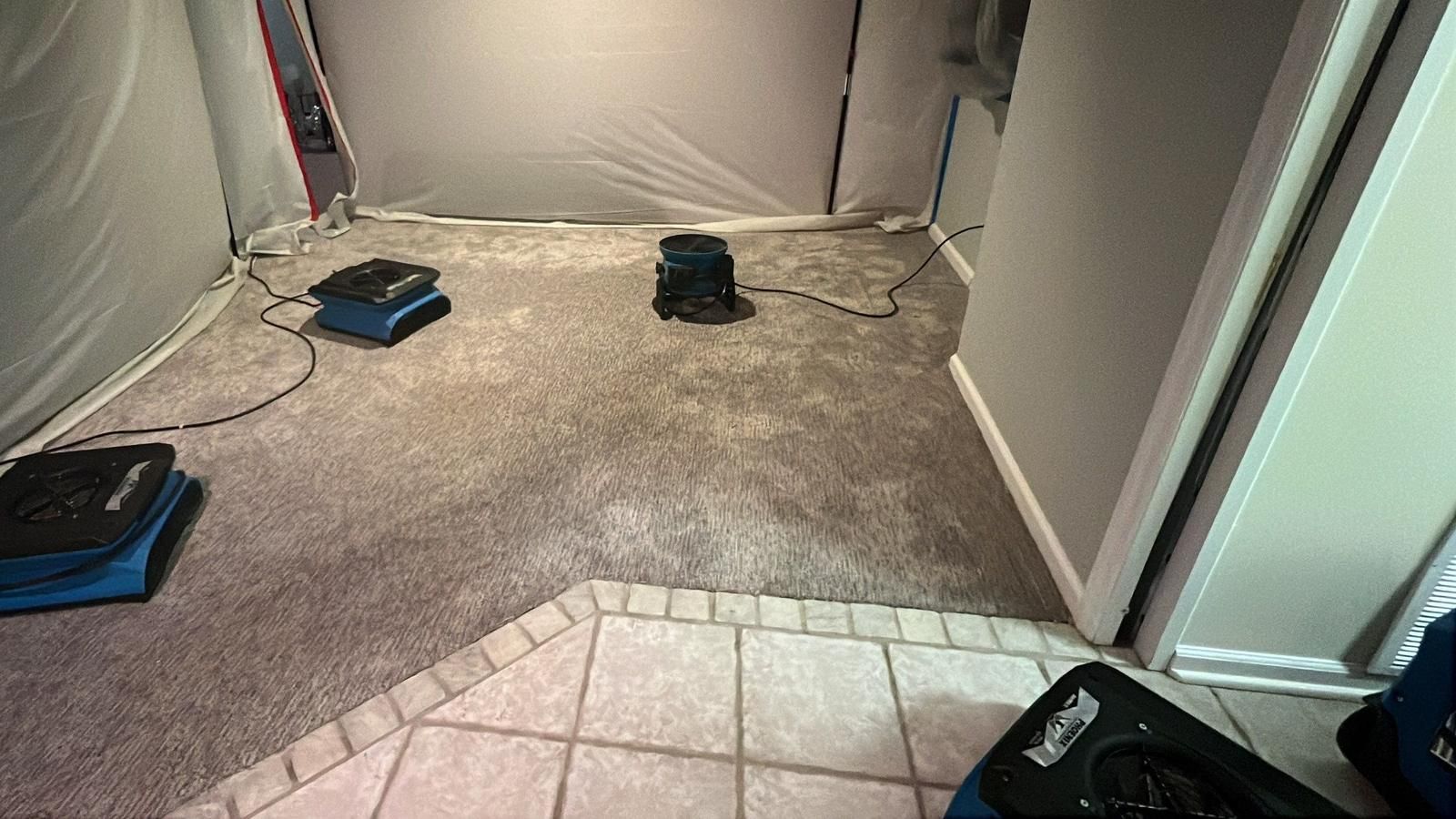
"Mitigation" is the emergency part of a water damage job: stopping the water, getting it out, and drying your home before mold and more damage set in. If you've just called us, or you're wondering what a restoration crew actually does, here's what the first day usually looks like and what to expect after we leave. Every job is different, but our crew follows the IICRC S500 standard for water damage restoration on every one.
Need help right now? Call or text MaxClean Restoration at 732-539-2942 · Text us Open 24/7 and usually on site within an hour in Monmouth, Ocean and Middlesex counties.
Safety first
Before we arrive, and when we get there, safety comes first:
- Stay out of rooms with standing water near outlets or appliances, and from under sagging ceilings.
- Shut off the water at the main valve if you can, and turn off power to wet areas only if you can reach the panel without standing in water.
- When we arrive, we check for electrical hazards, slip and trip hazards, ceiling collapse risk and contamination before anyone starts working.
- If the water is dirty(from a toilet, sewer or outside flooding), our crew wears protective gear and sets up controls to keep contamination from spreading. Keep kids and pets away.
What to do now, before the crew arrives
- Stop the water if you can safely, and call a plumber if a pipe or fixture needs repair.
- Take photos and video of the water and damaged rooms.
- Move small valuables, medications, papers and electronics to a dry place.
- Report the loss to your insurance company and have your claim number handy if you have it.
- Clear a path for the crew and equipment, and find a parking spot for the truck near the door.
- Secure pets in a dry room away from the work area.
What happens on day 1
1. Arrival (usually within an hour for emergencies). The crew introduces themselves, walks through with you and asks what happened, when it started and where the water came from.
2. Safety check and stopping the source. We make sure the water is off and the area is safe to work in.
3. Inspection and moisture mapping. We use moisture meters, thermal imaging cameras and hygrometers to find out how far the water spread. Water travels under flooring, behind baseboards and up drywall farther than you can see.
4. Category and class. Following IICRC S500, we determine the category of water (how clean or contaminated it is: Category 1 clean, Category 2 significantly contaminated, Category 3 grossly contaminated) and the class(how much wet material there is and how hard it will be to dry). This drives the whole plan.
5. Photos and documentation. We photograph everything and record the starting moisture readings, which are used for your claim and to prove the home is dry at the end.
6. Explaining the plan. We walk you through what we found, what we're going to do, and why, and you sign the paperwork authorizing the work. Ask us anything.
7. Protecting your belongings. Furniture is moved or set up on blocks, and items that need special care may be packed out for cleaning and drying.
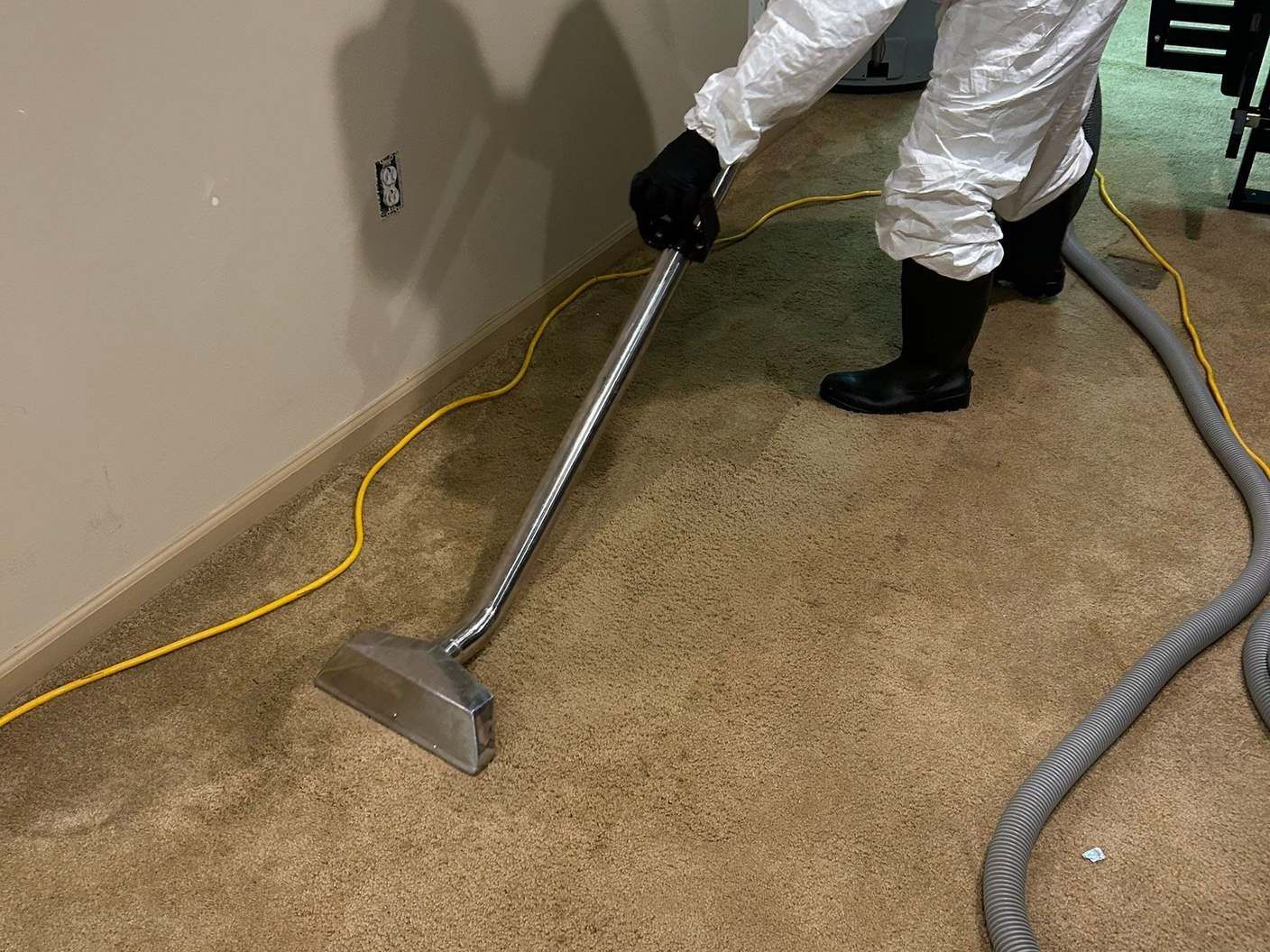
8. Water extraction. We remove standing water and water from carpet and pad with commercial extraction equipment. Getting the water out is the fastest way to speed up drying.
9. Removing what can't be saved. Some materials can't be dried in place or aren't safe to keep, like soaked carpet pad, swollen baseboards, saturated insulation, or drywall that's wet from dirty water. We may cut out the bottom of the wall (a "flood cut") so the inside of the wall can dry.
10. Cleaning and antimicrobial (when needed). If the water was contaminated, affected surfaces are cleaned and treated with an EPA-registered antimicrobial applied according to its label. Under the S500, clean water losses caught early usually don't need one.
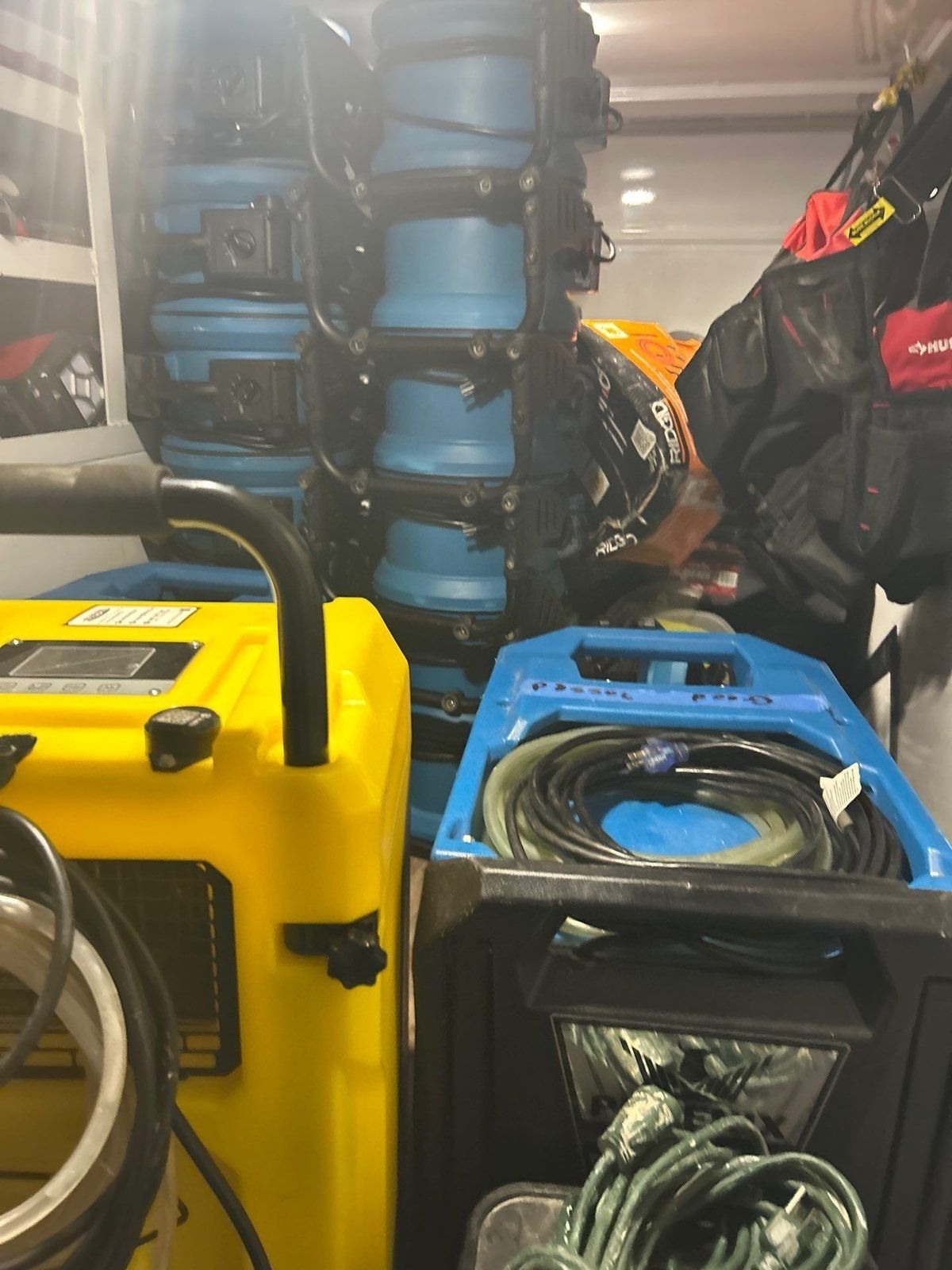
11. Setting the drying equipment. We set up commercial dehumidifiers and air movers sized for your rooms, and sometimes specialty equipment to dry inside walls, under cabinets or hardwood floors. We set a drying goal for each material based on readings from dry, unaffected areas of your home.
What NOT to do while your home is drying
- Don't turn off, unplug or move the equipment, even at night. Drying works around the clock.
- Don't open windows or doors unless the crew tells you to. It can bring in humid air and slow drying.
- Don't change the thermostat setting the crew asked for.
- Don't remove plastic barriers or containment.
- Don't walk on wet carpet more than you need to, and don't put furniture back until we say materials are dry.
- Don't put a vacuum or fan of your own in the room. Our equipment is balanced for the space.
What MaxClean does after day 1
- Daily monitoring. A technician comes back every day, takes moisture and humidity readings, and adjusts or moves equipment, following the IICRC S500.
- Ongoing updates. We tell you how drying is going and what's next.
- Equipment removal once every material has reached its drying goal, which we confirm with meters, not by touch or guesswork.
- Final documentation of the drying records for your claim.
- Reconstruction. We can put back drywall, flooring, cabinets and paint. See what to expect during reconstruction.
Learn more on our water damage restoration page.
Working with your insurance
We work directly with your insurance company and send the invoice to your carrier for you; you're responsible for your deductible and anything your policy doesn't cover.
In New Jersey, homeowners usually have the right to choose their own restoration contractor. We specialize in working with both homeowners and insurance companies to make sure the work is properly documented and covered, so your home gets back to its pre-loss condition.
For general steps to follow after any loss, see the insurance claim process, step by step or our insurance claims page.
When to call a professional
- Water has soaked carpet, drywall, insulation, wood floors or cabinets.
- Water came through a ceiling or ran inside a wall.
- The water came from a toilet, sewer line or outside flooding.
- It's been more than a day and things still feel damp or smell musty.
- You're not sure how far the water went.
Frequently asked questions
How long will the drying equipment be in my house? Most rooms take about three to five days, but it depends on how much water there was, what materials got wet, and the weather. We check readings every day and remove the equipment only when materials reach their drying goal.
Why is the equipment so loud and warm? Air movers push air across wet surfaces and dehumidifiers pull water out of the air, which gives off some heat. Both are working as intended. Keep doors to the room closed if the noise bothers you, but leave everything running.
Why did you cut my drywall? When drywall is soaked from dirty water, or the inside of the wall can't dry any other way, cutting out the bottom of the wall lets us remove damaged material and dry the framing and insulation properly.
Can I stay in my home during drying? Usually yes, as long as the water was clean and the home is safe. If the water was contaminated or someone in the home has health concerns, we may recommend staying out of the affected area or staying elsewhere.
How do you know when it's dry? We compare moisture readings in the wet materials to readings from the same materials in dry areas of your home. When they reach the drying goal, the job is dry, and the readings are documented.
Can I choose my own restoration company? In New Jersey, homeowners usually have the right to choose their own restoration contractor. We specialize in working with both homeowners and insurance companies to make sure the work is properly documented and covered, so your home gets back to its pre-loss condition.
Need help right now? Call or text MaxClean Restoration at 732-539-2942 · Text us Open 24/7 and usually on site within an hour in Monmouth, Ocean and Middlesex counties.
Related guides: Burst pipe: what to do in the first hour · Flooded basement or sump pump failure · The insurance claim process, step by step · What to expect during reconstruction · All guides
MaxClean Restoration, 11 Bannard Street, Freehold, NJ · IICRC Certified Firm · NJ HIC #13VH12188600 Open 24/7 and usually on site within an hour across Monmouth, Ocean and Middlesex counties.