MaxClean Restoration Blog
Musty Basement After Fall Rain? A Central New Jersey Homeowner's Guide to Hidden Moisture and Mold
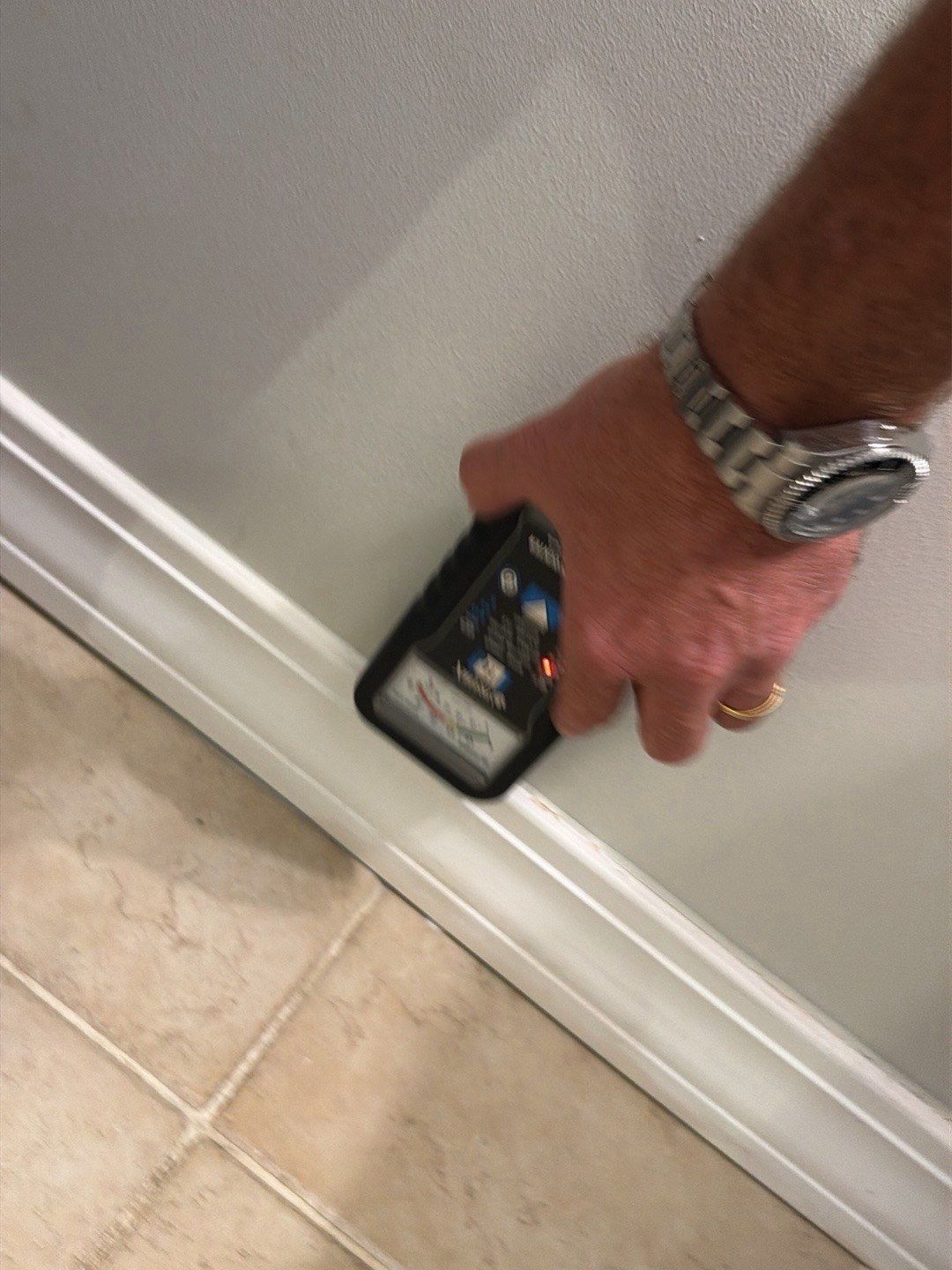
November in Central Jersey brings a familiar pattern: a few days of steady rain, then the first cold nights, and the windows stay shut until spring. That is often when homeowners in Manalapan, Toms River and East Brunswick first notice it. The basement smells a little off, the storage boxes feel damp, or a corner of drywall looks darker than it used to.
A musty smell is not just an annoyance. It usually means moisture is sitting somewhere it should not be, and that mold has started or is about to. Catching it in the fall, before the house is sealed up for winter, is far easier than dealing with it in March.
Why Basements Smell Musty After Rain
The odor comes from mold and mildew growing on damp, porous materials. Fall gives them plenty to work with:
- Saturated soil pushes water vapor and seepage through foundation walls and slab cracks.
- Clogged gutters and short downspouts dump roof water right against the foundation.
- Closed windows and the start of heating season trap humid air and spread odors through the house.
- Finished basements hide wet carpet pad, wall plates and insulation behind clean-looking surfaces.
Signs the Problem Is More Than Dampness
A brief damp smell after a big storm can fade once things dry out. Look closer if you notice any of these:
- The odor is strongest in one corner, closet or under the stairs.
- Baseboards, drywall or paneling feel soft, look stained or bubble.
- White, gray, green or black spots show up on walls, joists or stored items.
- Carpet feels cool or damp to the touch days after the rain stops.
- Allergy symptoms seem worse when you spend time downstairs.
Quick Checks You Can Do This Week
1. Walk the outside after the next rain
Look for overflowing gutters, downspouts that drain within a few feet of the house, and soil that slopes toward the foundation. Fixing drainage is often the cheapest step.
2. Measure basement humidity
An inexpensive hygrometer tells a lot. Readings that stay above about 60 percent give mold room to grow. A properly sized dehumidifier, emptied or drained regularly, helps keep it in check.
3. Check what sits on the floor
Cardboard boxes, area rugs and stored clothes soak up moisture. Lift them off the slab, and move anything that already smells to an area where you can inspect it.
4. Look behind and under finished surfaces
Pull back a corner of carpet, peek inside the utility room and check the bottom few inches of drywall. Moisture usually shows up low first.
When to Call MaxClean Restoration
Small surface mildew on a hard surface is often a homeowner cleanup. Call MaxClean Restoration at 732-539-2942 when:
- Visible growth covers more than a small patch, roughly 10 square feet or more.
- The smell persists even after you dry and ventilate the space.
- Water came in during a storm and finished materials stayed wet for more than a day or two.
- You suspect moisture inside walls or under flooring but cannot see it.
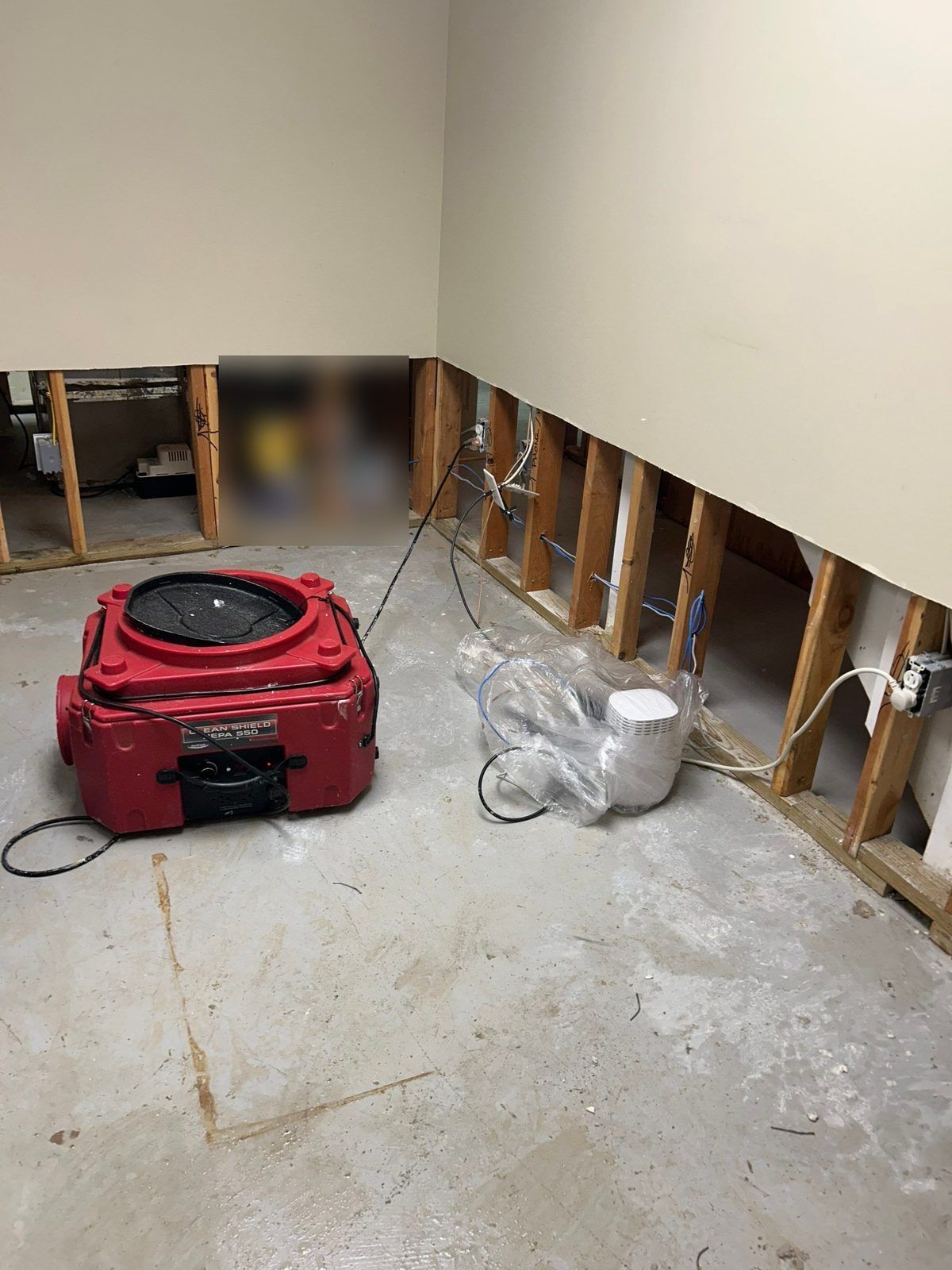
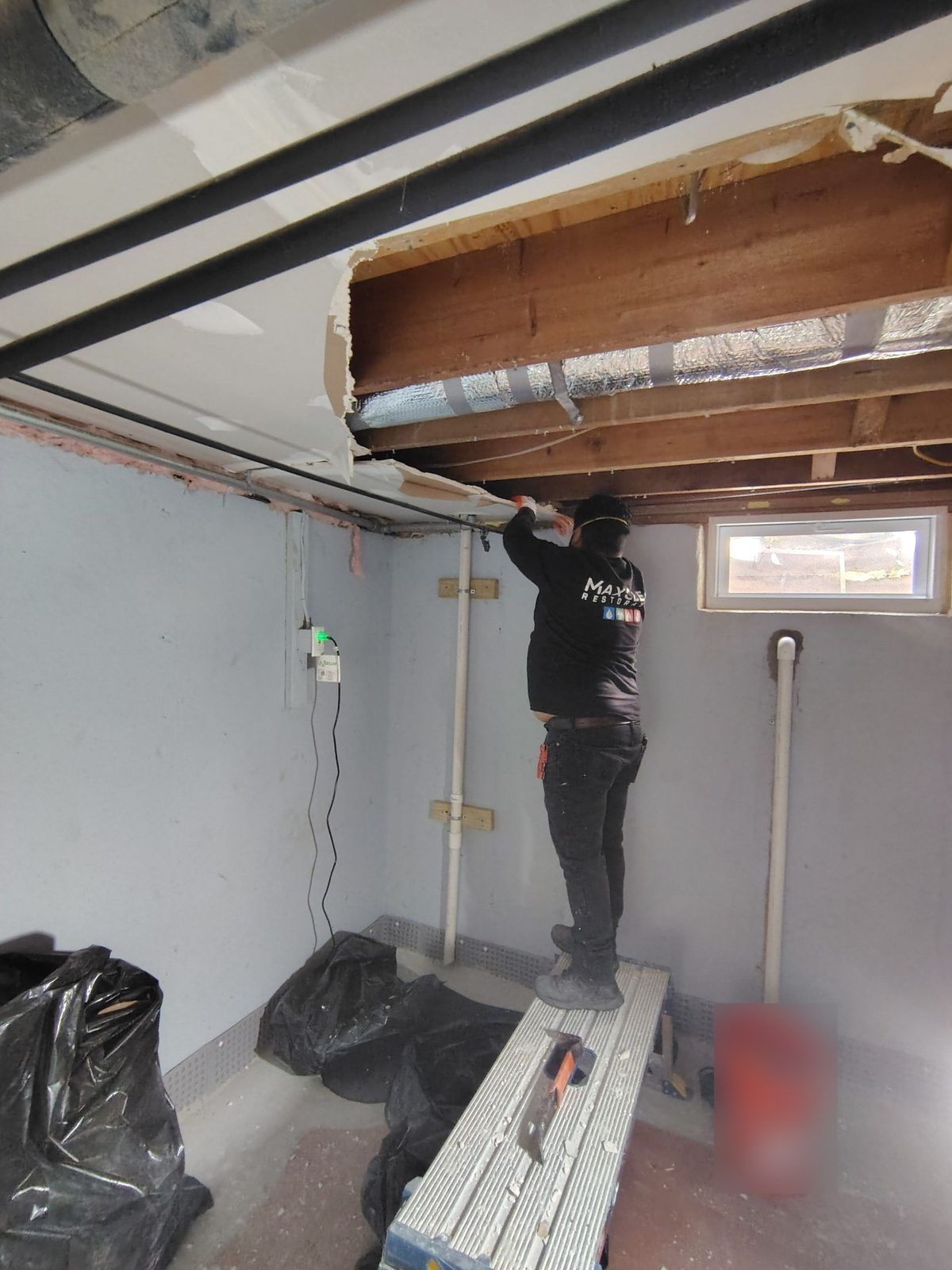
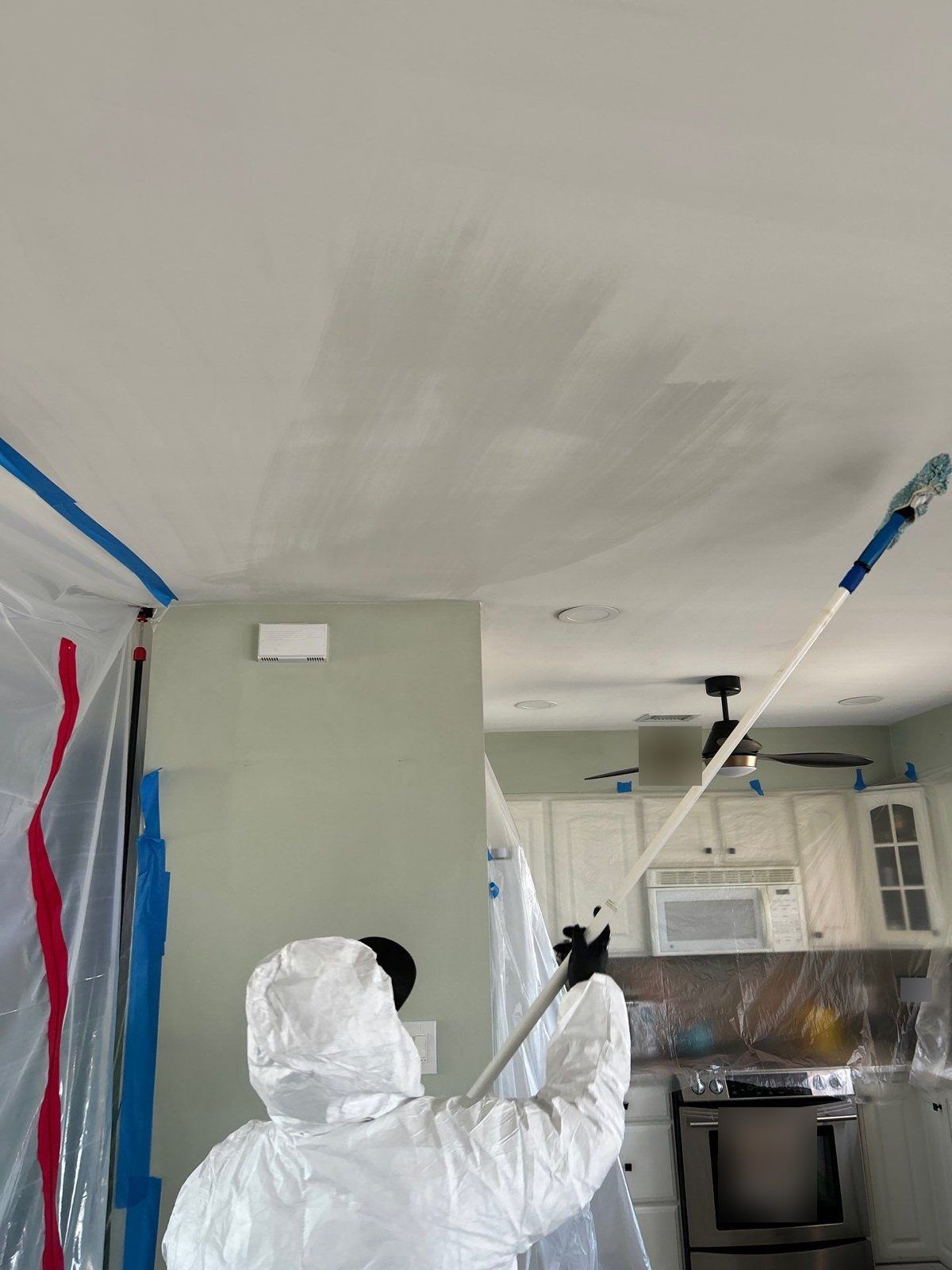
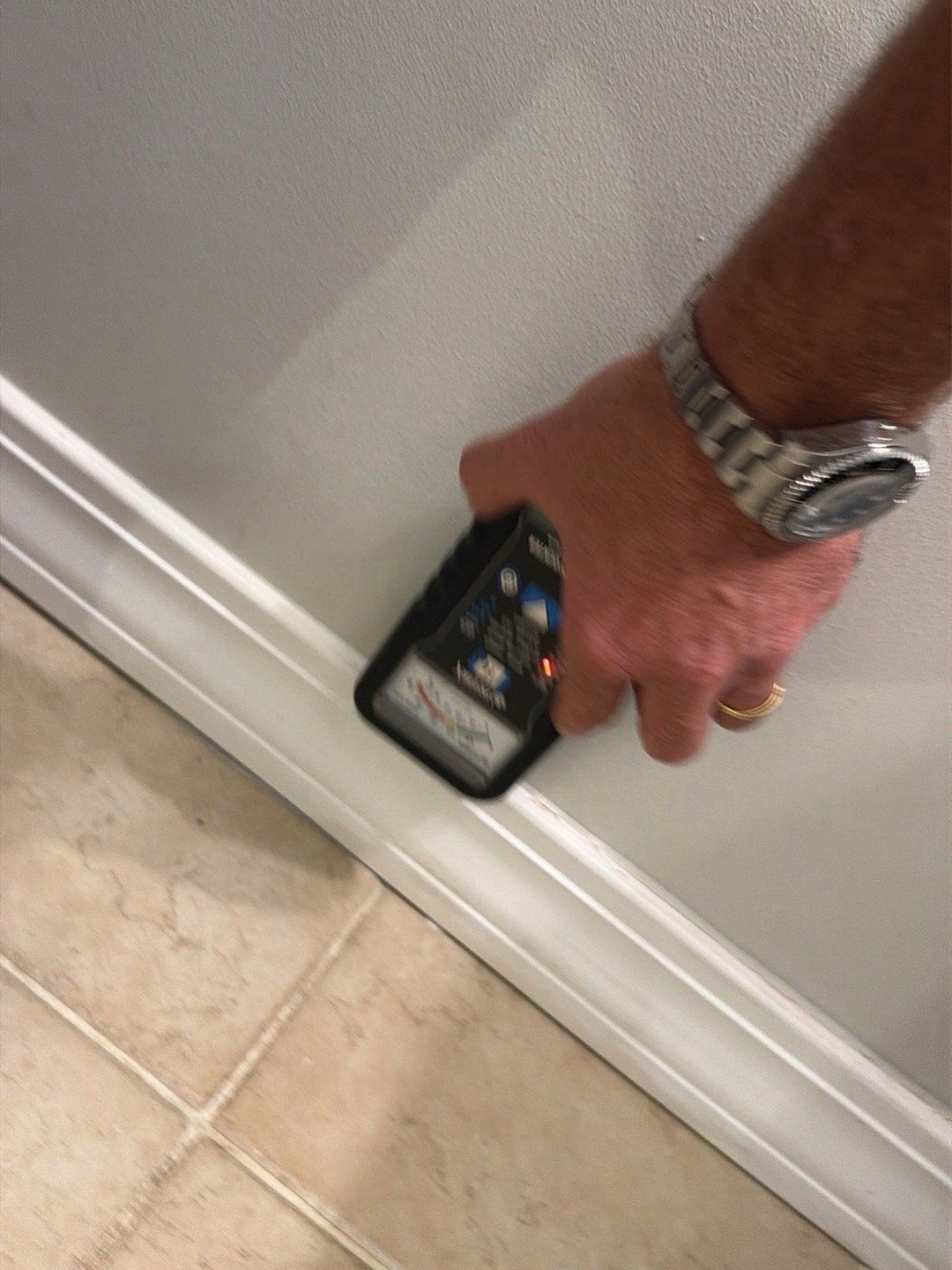
Our team uses moisture meters and thermal imaging to find wet materials you cannot see, sets up containment so spores do not spread to the rest of the house, removes what cannot be saved and dries the structure to a dry standard. Bleach on a wall surface does not fix moisture behind it.
What Not to Do
A few common moves make a mold problem worse:
- Do not paint over stains without finding and fixing the moisture source.
- Do not run fans across visible mold, which can spread spores into the rest of the home.
- Do not tear out moldy drywall without containment if the area is large.
Will Insurance Cover Mold in the Basement?
Coverage typically depends on the cause. Mold that results from a sudden, covered water event, such as a burst pipe, is often treated differently from mold caused by long-term seepage, humidity or maintenance issues, which many policies exclude or limit. Check your policy and ask your agent before you assume either way. When MaxClean Restoration handles a covered loss, we send the invoice to your insurance carrier on your behalf, but the invoice is still the homeowner's responsibility, including your deductible and anything your carrier does not pay.
FAQ
Is a musty basement smell always mold?
Not always, but it usually means moisture is present and mold is likely starting. Find and dry the source first, then check for growth.
Will a dehumidifier get rid of mold?
A dehumidifier helps prevent new growth by lowering humidity, but it does not remove mold that is already there. Existing growth on porous materials typically needs removal.
How fast can mold grow after a basement gets wet?
Mold can begin to grow in roughly 24 to 48 hours on wet, porous materials. That is why fast drying after a storm matters.
Mold and Moisture Help in Monmouth, Ocean and Middlesex Counties
MaxClean Restoration, based in Freehold, helps homeowners across Monmouth, Ocean and Middlesex counties find hidden moisture, remove mold safely and dry basements back to normal. If your basement smells musty or you see growth after the fall rains, call 732-539-2942 and our team will schedule an inspection.