
MaxClean Restoration Blog
Ice Dams in New Jersey: Why Winter Ceiling Leaks Happen and How to Prevent Them
You don't need a blizzard to get an ice dam. A few inches of snow, a sunny afternoon and a cold night are enough. When water starts dripping from a ceiling in January, it's often ice-dam meltwater, not a roof that's actually failing.

What Is an Ice Dam?
An ice dam is a ridge of ice along the roof edge. Heat escaping from the living space warms the upper roof deck and melts the snow there. The meltwater runs down to the cold eaves, refreezes, and builds a dam. More meltwater pools behind it, works under the shingles and leaks into the soffit, the top of the exterior wall or the ceiling.
Homes that are most at risk
- Cape Cods and homes with knee walls or finished attic space
- Older homes with thin attic insulation
- Homes with recessed lights or bath fans that leak warm air into the attic
- Roofs with complex valleys or low-pitch sections
Warning Signs
- Thick icicles along the gutters, especially with water dripping behind them
- Ice built up in the gutters or on the roof edge
- Brown stains or peeling paint near the ceiling on exterior walls
- Damp insulation or frost on the underside of the roof deck when you look into the attic
Prevention (Do It Before Snow Season)
Fix the heat loss
Ice dams start with heat escaping into the attic. Air-sealing the attic floor (around light fixtures, the attic hatch, plumbing and wiring penetrations) and adding insulation are the long-term fix.
Ventilate the attic
Soffit and ridge vents keep the roof deck cold and even. Make sure the insulation isn't blocking the soffit vents.
Clear the gutters
Clogged gutters freeze solid faster. Clean them after the leaves drop in November.
Ask about ice and water shield
If you're replacing the roof, a waterproof underlayment along the eaves is standard in many codes and adds protection.
During a Storm
- Use a roof rake from the ground to pull snow off the bottom few feet of the roof.
- Don't climb on an icy roof or chip at ice with a hammer or axe. You can damage the shingles or get hurt.
- Calcium chloride in a nylon stocking laid across the dam can melt a drainage channel. Never use rock salt, which damages roofing and plants.
If Water Comes Inside
- Catch the drip and protect furniture and flooring.
- Poke a small hole in a ceiling bulge to release trapped water into a bucket, but only if it's safe and away from light fixtures.
- Take photos of the interior and the ice on the roof.
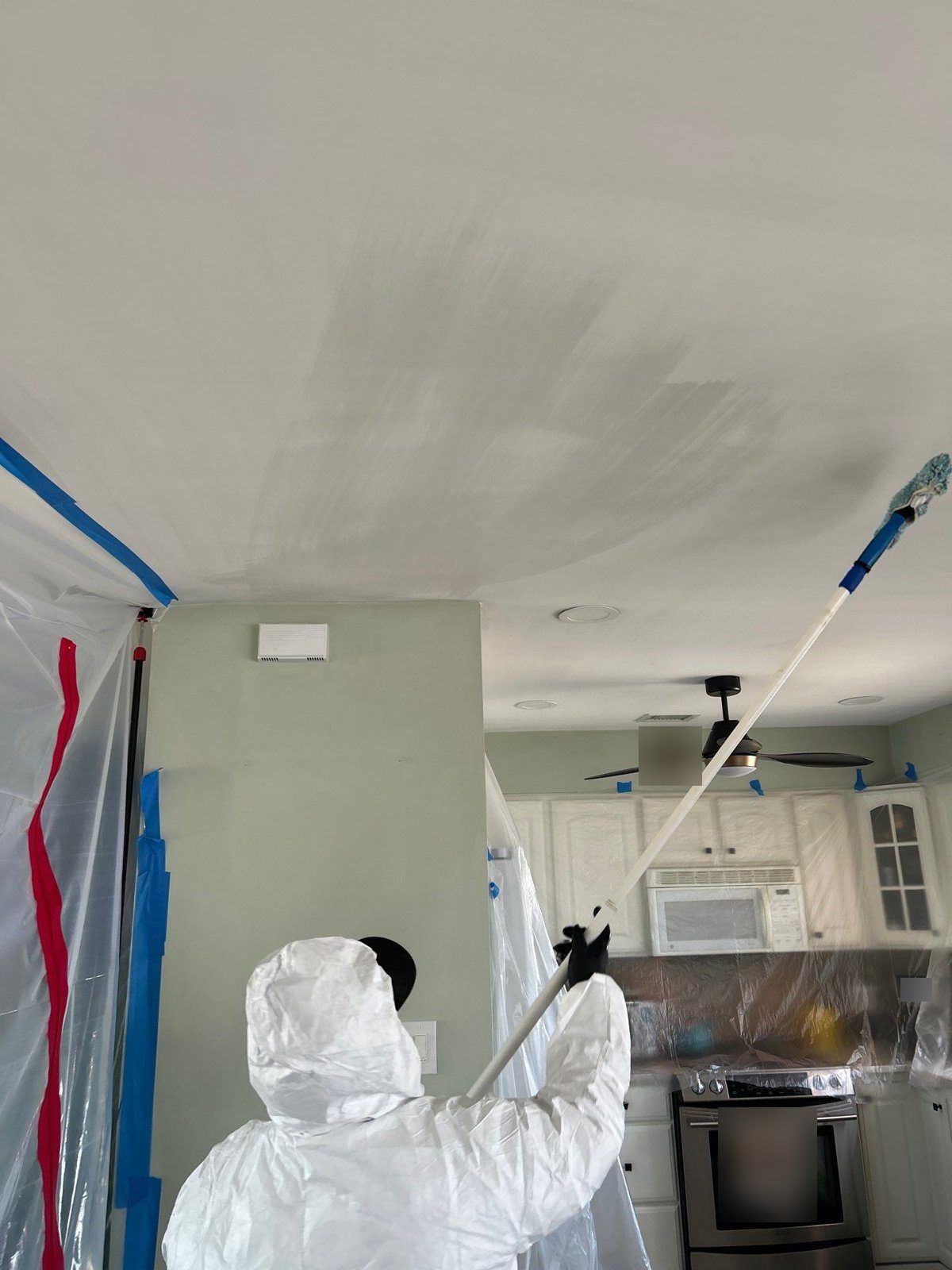
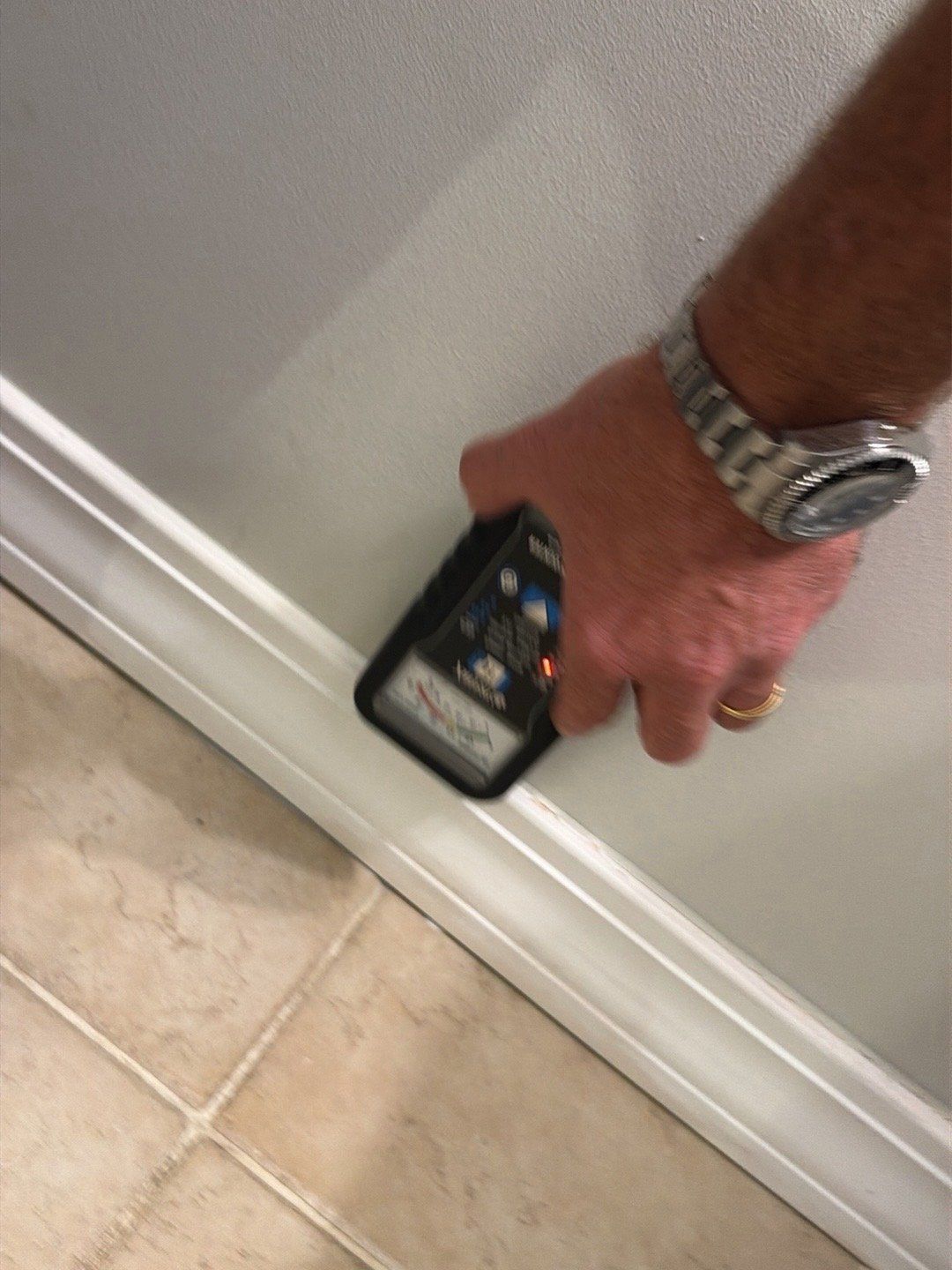
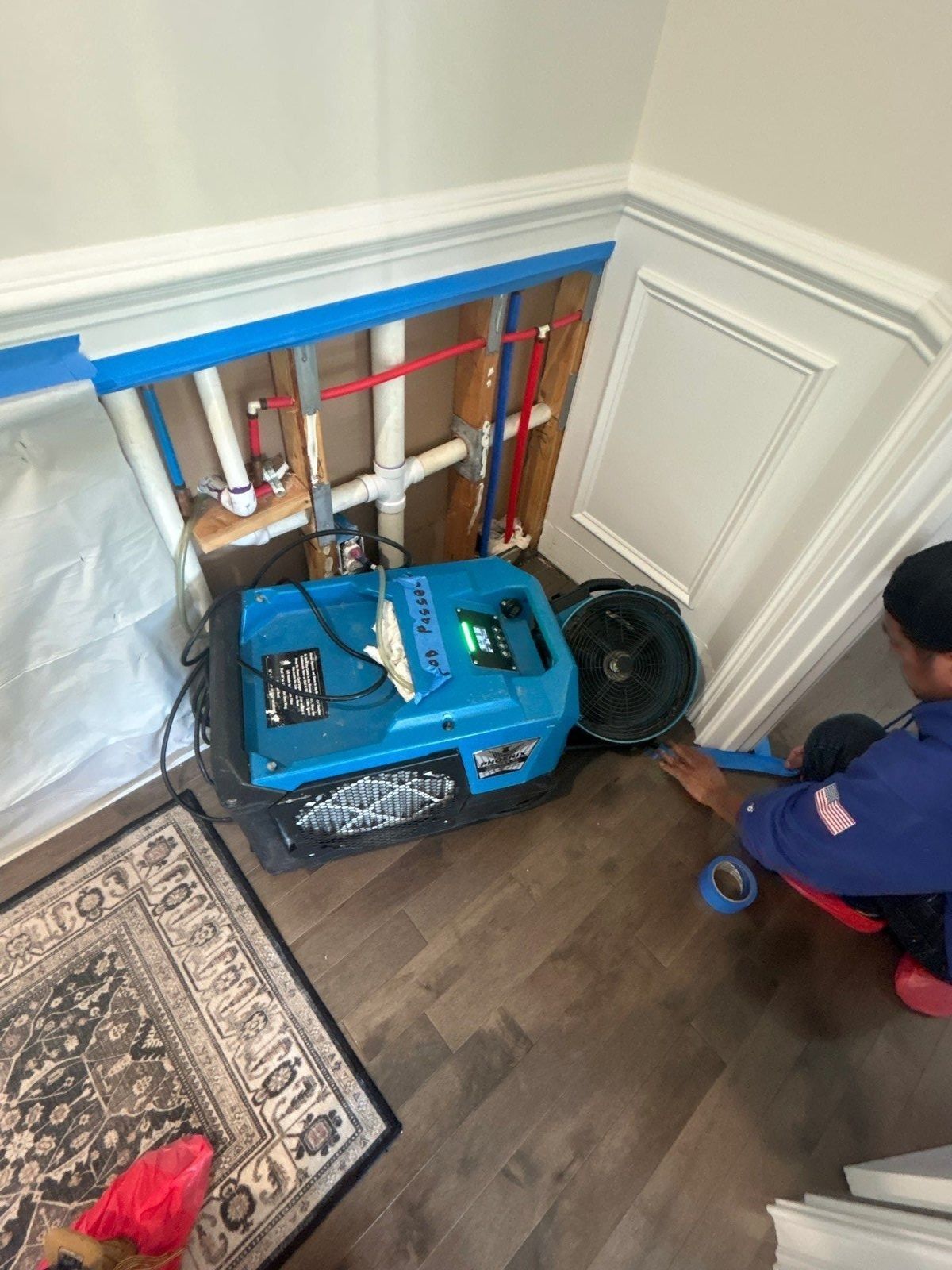
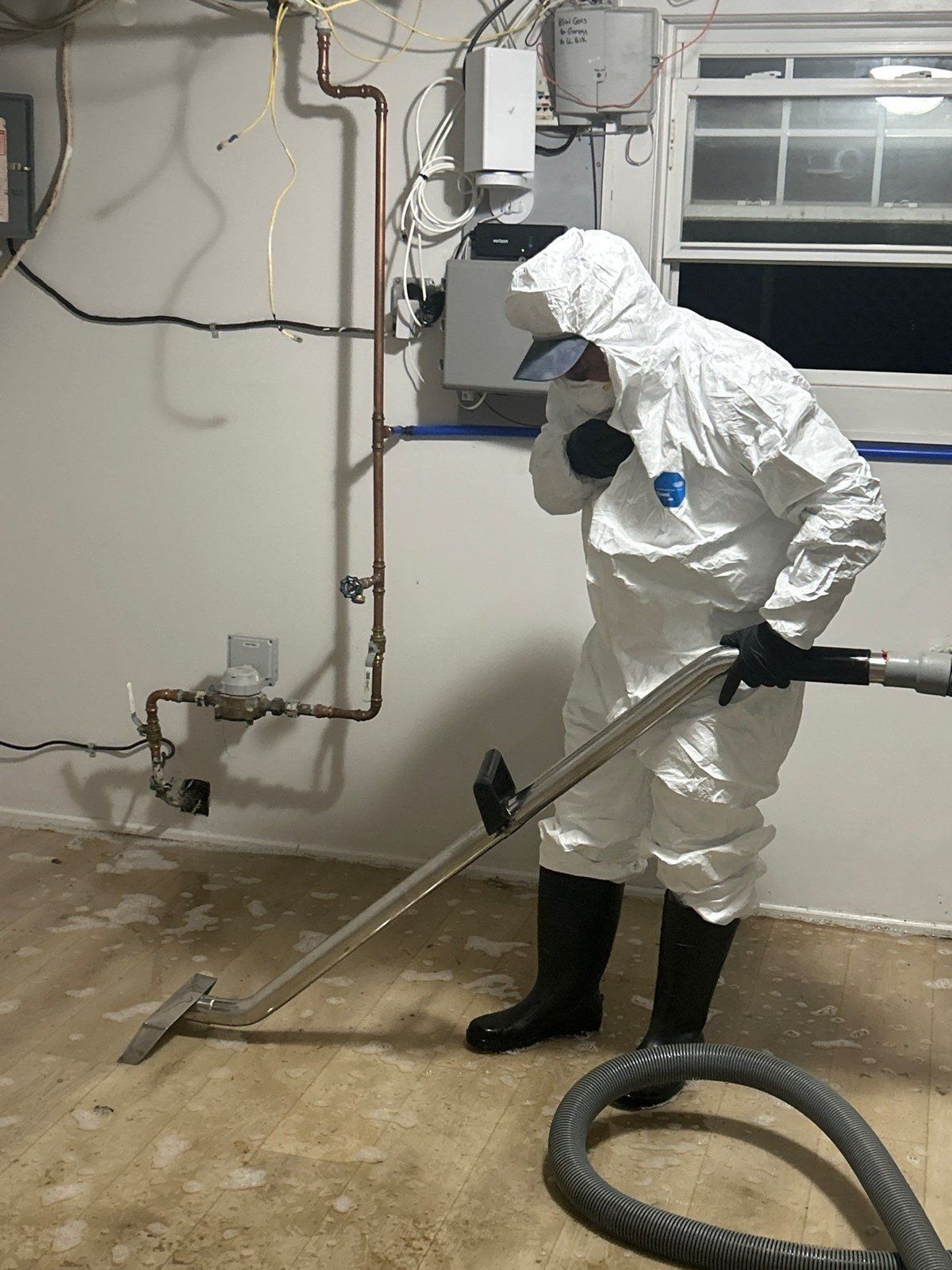
- Call for water mitigation. Wet ceiling insulation and wall cavities hold water and won't dry on their own. Hidden moisture can lead to mold. We use moisture meters and thermal imaging to find out how far the water spread, then dry the space and document it.
Insurance Notes
Policies vary on ice dam damage, and repairs to the roof or to fix poor insulation may be treated differently from interior water damage. Check your policy and document everything. We send the invoice to your insurance carrier on your behalf, but the invoice is still the homeowner's responsibility. That includes your deductible and anything your carrier doesn't pay.
FAQ
Will heat cables prevent ice dams?
They can help on trouble spots, but they don't fix the underlying heat loss.
Can an ice dam leak cause mold?
Yes, if wet insulation and drywall aren't dried promptly. Hidden ceiling cavities are a common spot.
Do I need to replace the whole ceiling?
Not always. Many ceilings can be dried in place. Sagging or heavily stained drywall usually needs to be replaced.
Ceiling Leak This Winter?
MaxClean Restoration responds 24/7 to water damage from ice dams across Monmouth, Ocean and Middlesex counties, from older Cape Cods in Tinton Falls and Sayreville to the steep, complicated rooflines common in Rumson, Wall and Point Pleasant. Call 732-539-2942.