
MaxClean Restoration Blog
Furnace Puff-Back Cleanup: A Room-by-Room Guide for Central New Jersey Homeowners This Heating Season
Black soot after your furnace kicked on? What a puff-back is, what not to touch, and how pro cleanup and insurance typically work in Central NJ.
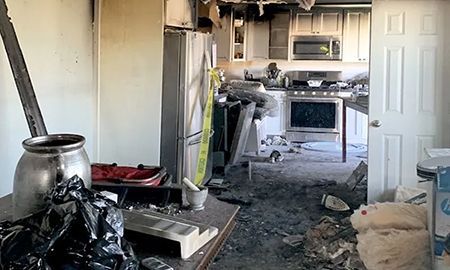
The first cold mornings of October and November are when furnaces and oil burners that sat idle all summer start up again. Most of them run fine. Sometimes, though, a homeowner hears a dull thump from the basement and then finds fine black film on the ceilings, curtains and vents upstairs. That's a puff-back.
This guide covers what's happening, what to avoid in the first few hours, and how cleanup typically works for homes across Monmouth, Ocean and Middlesex counties, where plenty of older houses in Manalapan, Middletown, Jackson and Old Bridge still run oil heat.
What Actually Happens in a Puff-Back
A puff-back is a small, contained explosion inside the combustion chamber. In oil burners, it usually happens when fuel builds up and then ignites late. A clogged nozzle, a weak ignition transformer, a dirty filter or a blocked chimney or flue can all cause it. Gas furnaces can have delayed-ignition events too, though oil-heat homes see them far more often.
The pressure from that ignition pushes unburned fuel and soot out of the burner. From there it can:
- Blow back into the basement or utility room
- Get pulled into the return air and pushed through the ductwork
- Settle in every room the system serves
Signs You've Had One
Some puff-backs are obvious; others show up over a day or two. Watch for:
- A loud bang or "whoomp" when the heat kicks on
- Black or gray film around supply registers and on the ceiling just above them
- Dark "soot webs" in corners and along ceiling edges
- A sharp oil or burnt smell that doesn't fade
- Smudges on window blinds, lampshades and light-colored fabrics
First: Make the Heating System Safe
Before anything else, turn the system off and call your oil company or a licensed HVAC technician. A puff-back means something in the burner isn't working right, and running it again can cause another event. Have the burner, flue and chimney repaired before the heat comes back on, and ask for a written service report. It often matters for insurance.
What Not to Do
It's natural to want to grab a rag. Please don't, at least not yet.
- Don't wipe or scrub the soot. Oily soot smears, and household cleaners push it into paint, grout and fabric. Paint won't bond to it either, so don't repaint over it.
- Don't run the HVAC system. Even the fan alone moves soot from the ducts back into clean rooms.
- Don't use a regular vacuum. It blows fine particles through the bag and back into the air.
- Don't wash soot-covered clothes yourself. Oily soot can set in a home washer. Many textiles can be professionally cleaned when handled correctly.
How Professional Puff-Back Cleanup Works
Every home is different, but a thorough cleanup typically follows this order.
1. Assessment and containment
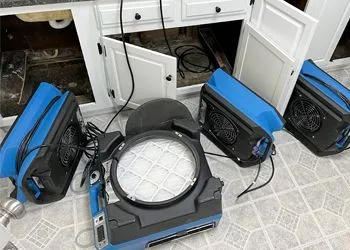
We walk every room, including closets and the basement, and photograph conditions before anything is touched. Plastic sheeting separates cleaned rooms from affected ones, and HEPA air scrubbers capture airborne particles.
2. Dry soot removal first
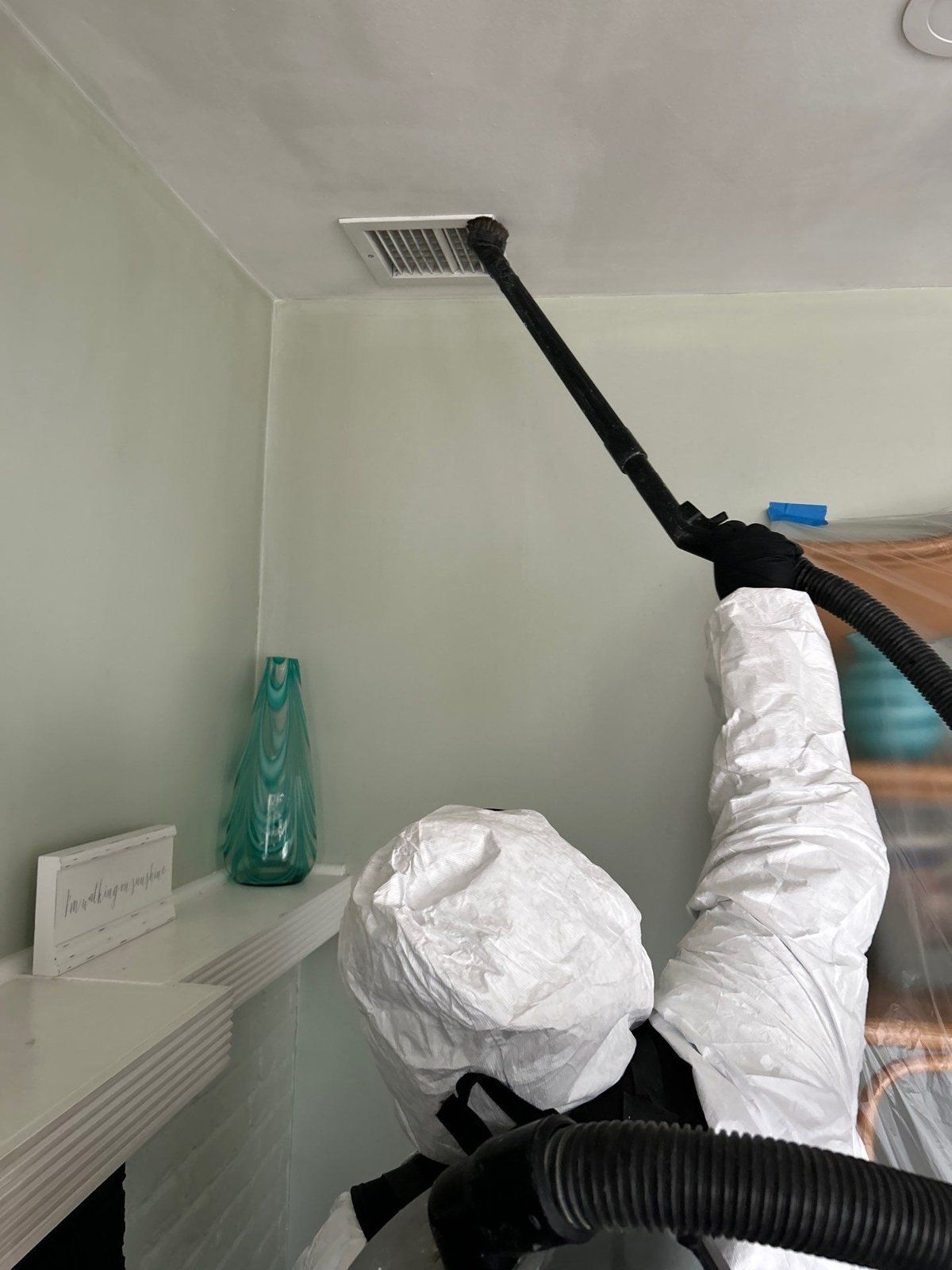
HEPA vacuums lift loose soot, then techs use dry chemical soot sponges on walls and ceilings. They pull soot off without smearing. This dry step is what keeps a cleanup from becoming a repaint.
3. Wet cleaning
Surfaces are then cleaned with degreasers matched to the material: painted drywall, cabinets, trim, glass and fixtures.
4. Duct cleaning
If soot traveled through the ductwork, the ducts need cleaning too. Otherwise the first heat cycle puts it all back.
5. Contents cleaning
Furniture, electronics, dishes, clothing and drapes may be cleaned on-site or packed out, inventoried and returned.
6. Odor treatment
Lingering oil odor can be treated with thermal fogging, hydroxyl or ozone (only when the home is unoccupied), and sealing where needed.
Does Insurance Cover Puff-Back Damage?
Homeowners insurance typically covers cleanup of the structure and contents after a puff-back, because it's usually treated as a sudden and accidental event. Coverage varies, so check your policy and talk to your agent or adjuster early.
A few things that typically help:
- Report the claim promptly and keep photos of the soot before cleaning.
- Keep the HVAC or oil company's service report.
MaxClean doesn't guarantee coverage, but we provide detailed photos and cleaning records your adjuster can use.
FAQ
Is puff-back soot dangerous?
It's an irritant, especially for kids, older adults and anyone with asthma. Limit time in heavily affected rooms until cleanup is done.
How long does cleanup take?
A small, contained puff-back may take a couple of days. A whole-house event with duct and contents cleaning can typically take one to two weeks.
How do I prevent another one?
Get the burner serviced every year before heating season, and replace filters and nozzles as recommended.
Puff-Back Help in Monmouth, Ocean and Middlesex Counties
If your furnace or oil burner just puffed back, shut it off, call your heating tech, and leave the soot alone. MaxClean Restoration cleans puff-back damage in homes across Central Jersey from our base in Freehold. Call 732-539-2942, and we'll walk you through the next steps.