

Burst Pipe: What to Do in the First Hour
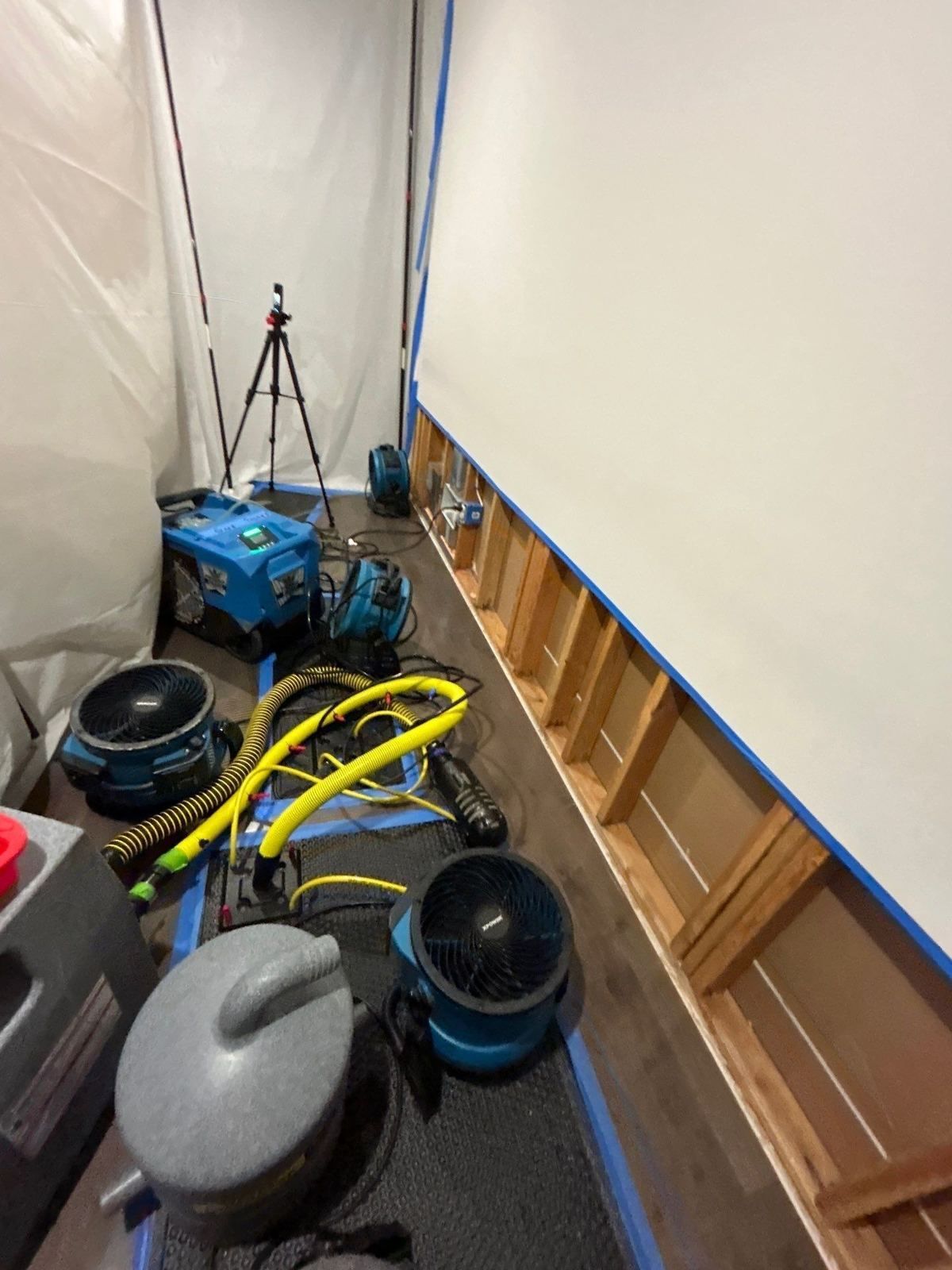
A burst pipe can release hundreds of gallons of water an hour. What you do in the first few minutes makes a big difference in how much of your home can be saved. Here is what to do, in order.
Need help right now? Call or text MaxClean Restoration at 732-539-2942 · Text us Open 24/7 and usually on site within an hour in Monmouth, Ocean and Middlesex counties.

Step by step: what to do right now
- Shut off the main water valve. It's usually where the water line enters the house: in the basement, the crawlspace, a utility closet or near the water heater. Turn the handle clockwise (or a quarter turn for a lever) until it stops.
- Turn off electricity to wet areas if you can reach the breaker panel without standing in water. If water is near outlets, the panel or appliances, stay out and call for help.
- Open a faucet at the lowest point of the house to drain the water left in the pipes.
- Take photos and video of the water, the damaged pipe and every affected room before you move anything. Your insurance company will want them.
- Move valuables, electronics and furniture out of the water if it's safe. Put aluminum foil or wood blocks under furniture legs that can't be moved.
- Soak up what you safely can with towels or a wet/dry vacuum. Mop small puddles off hardwood quickly.
- Call a plumber to repair the pipe and a water damage restoration company to dry the structure. MaxClean answers 24/7: 732-539-2942.
- Call your insurance company to report the loss, and write down the claim number.
What NOT to do
- Don't use a regular household vacuum on water.
- Don't walk into a flooded room if the power is still on.
- Don't turn on ceiling lights or fans if the ceiling is wet or sagging. Stay out from under a sagging ceiling.
- Don't use a heat gun or open flame to thaw a frozen pipe.
- Don't wait and "see if it dries." Hidden moisture in walls, subfloors and insulation can grow mold in 24 to 48 hours.
- Don't throw away damaged items until they've been photographed for your claim.
When to call a professional
- Water has soaked carpet, drywall, insulation or wood floors.
- The ceiling is stained, bulging or dripping.
- Water reached the basement, crawlspace or HVAC system.
- You smell a musty odor in the days after the leak.
- The water came from a dirty source, like a toilet overflow or sewer backup.
Working with your insurance
We work directly with your insurance company and send the invoice to your carrier for you; you're responsible for your deductible and anything your policy doesn't cover.
In New Jersey, homeowners usually have the right to choose their own restoration contractor. We specialize in working with both homeowners and insurance companies to make sure the work is properly documented and covered, so your home gets back to its pre-loss condition.
Learn more on our insurance claims page or our water damage restoration page.
Printable checklist
Burst Pipe: What to Do in the First Hour: Checklist
- ☐ Main water valve shut off
- ☐ Power off to wet areas (only if safe)
- ☐ Faucets opened to drain the lines
- ☐ Photos and video of the damage taken
- ☐ Valuables and electronics moved to a dry area
- ☐ Plumber called for the pipe repair
- ☐ Restoration company called for drying
- ☐ Insurance claim reported and number written down
- ☐ MaxClean Restoration 24/7: 732-539-2942
Frequently asked questions
How fast should a burst pipe be dried out? Drying should start as soon as possible, ideally within 24 hours. Mold can begin to grow in 24 to 48 hours on wet drywall, carpet pad and wood. MaxClean is open 24/7 and is usually on site within an hour in Monmouth, Ocean and Middlesex counties.
Does homeowners insurance cover a burst pipe? Coverage depends on your policy, so check your policy or ask your agent. We work directly with your insurance company and send the invoice to your carrier for you; you're responsible for your deductible and anything your policy doesn't cover.
Where is my main water shutoff? Most NJ homes have the main shutoff where the water line enters the house, usually in the basement, crawlspace or a utility room near the water meter or water heater. Find it now and label it. The free emergency plan at plan.maxcleanrestoration.com lets you save its location and a photo.
Can I choose my own restoration company? In New Jersey, homeowners usually have the right to choose their own restoration contractor. We specialize in working with both homeowners and insurance companies to make sure the work is properly documented and covered, so your home gets back to its pre-loss condition.
How do I keep pipes from freezing? Keep the heat at 55°F or higher, open cabinet doors under sinks on outside walls, let faucets drip during hard freezes, disconnect garden hoses and insulate pipes in unheated spaces.
Get ready before it happens: build a free emergency plan for your home (shutoff locations, emergency contacts, maintenance reminders) at plan.maxcleanrestoration.com.
Need help right now? Call or text MaxClean Restoration at 732-539-2942 · Text us Open 24/7 and usually on site within an hour in Monmouth, Ocean and Middlesex counties.
Related: water damage restoration · All Resource Center guides · Insurance claim help · Free home emergency plan
MaxClean Restoration, 11 Bannard Street, Freehold, NJ · IICRC Certified Firm · NJ HIC #13VH12188600 Open 24/7 and usually on site within an hour across Monmouth, Ocean and Middlesex counties.