

Sewer Backup vs. Overflow: Why the Difference Matters for Your Claim
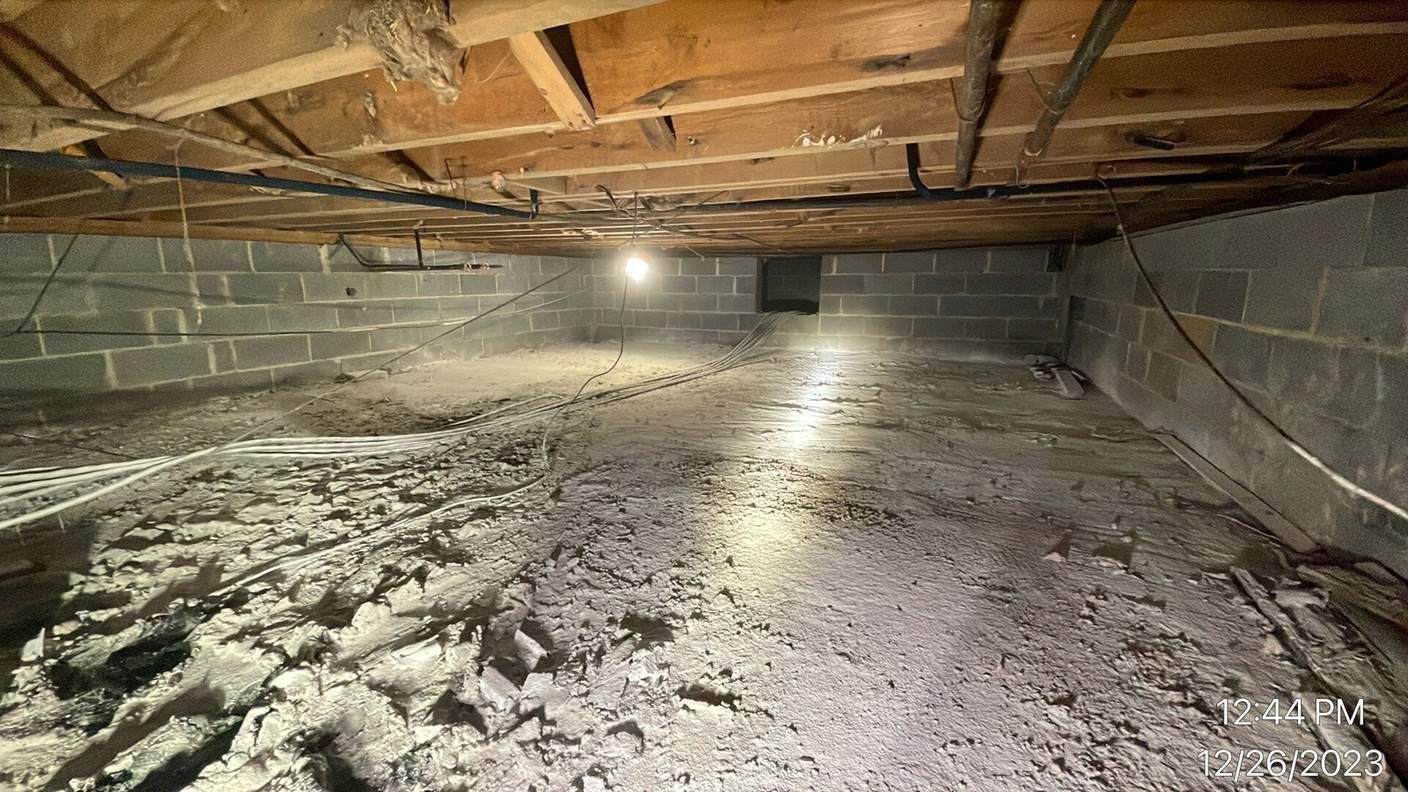
When dirty water shows up on your floor, it's natural to call it all "a backup." But to an insurance company, a sewer or septic backup and an overflow from a fixture inside your home are two different events. Many homeowners policies treat them differently, and sewer or water backup protection is often a separate add-on (an endorsement) with its own limit. This guide explains the difference, how to tell which one you have, and why describing the cause accurately matters when you file a claim.
Water or sewage in your home right now? Call MaxClean Restoration at 732-539-2942 Open 24/7 in Monmouth, Ocean and Middlesex counties. We're usually on site in about an hour near Freehold, and in about 2 hours in Lacey, Stafford, Barnegat and Little Egg Harbor.
What is a sewer or septic backup?
A backup is water or sewage that comes up into your home from the sewer or septic line, usually through the lowest openings: a basement floor drain, basement toilet, shower or tub. Common causes include:
- A clog in your main sewer line (wipes, grease, paper towels)
- Tree roots growing into the line
- The public sewer getting overloaded during heavy rain (a "surcharge") and pushing water back toward homes
- A failing septic tank or drain field
- A collapsed, sagging or broken sewer pipe
What is an overflow?
An overflow is water that spills over the top of a fixture or appliance inside your home. The problem starts at that one fixture, not in the sewer line. Examples:
- A clogged toilet that overflows when flushed
- A tub or sink left running
- A washing machine that overfills or a drain hose that pops out
- A clogged kitchen or bathroom sink
Overflow water can be clean (a running sink), gray (a washer or dishwasher) or contaminated (a toilet with waste in it). See our guide to a toilet or appliance overflow.
Backup vs. overflow at a glance
| Sewer or septic backup | Overflow | |
|---|---|---|
| Where it comes from | The sewer or septic line, pushed up into the house | A fixture or appliance inside the house spilling over |
| Where you see it | Floor drains, lowest toilets, showers and tubs, often in the basement | At the fixture itself: toilet, tub, sink or washer |
| Typical causes | Main-line clog, tree roots, heavy rain overloading the public sewer, septic failure | Clog in that one fixture, a valve or hose failure, a faucet left on |
| Water quality | Sewage: Category 3, grossly contaminated | Clean, gray or contaminated, depending on the source and how long it sat |
| How insurance may look at it | Often handled under a separate sewer or water backup endorsement with its own limit | Often reviewed under the main policy's water damage terms |
Policies vary. This table is general information, not a statement of what your policy covers. Check your policy and talk to your agent.
Signs it's a backup vs. an overflow
It's more likely a backup if:
- Water comes up from a floor drain or the lowest drain in the house
- More than one drain is slow, gurgling or backing up at the same time
- Running water in one place (like the washer) makes water come up somewhere else
- It happened during or right after heavy rain
- There's a strong sewer smell and you see waste or toilet paper you didn't flush
- You're on septic and the yard over the tank or drain field is soggy or smells
It's more likely an overflow if:
- Only one fixture is affected and the water came over its rim
- Other drains in the house work normally
- Plunging or clearing that one fixture fixed the problem
- A faucet was left on, or a washer or dishwasher hose or valve failed
Not sure? That's normal. Don't guess. A licensed plumber or sewer service can find the actual cause, often with a camera inspection of the line.
Why the cause matters for your insurance claim
Your insurance company reviews a claim based on what caused the damage. The Insurance Information Institute and the NAIC both note that many standard homeowners policies offer limited or no protection for sewer or drain backups, and that this protection is often available as a separate endorsement. Those endorsements commonly have their own dollar limit and their own deductible. An overflow from a fixture inside the home may be reviewed under different terms of the policy.
That's why it matters to describe the cause accurately. If the cause is guessed, mixed up or described wrong, the claim may be reviewed under the wrong part of the policy, which can lead to delays, extra questions or a reinspection. The goal isn't to choose words to get a certain result. It's to report what actually happened, with proof.
Policies vary, and we can't tell you what your policy covers. Read your policy and declarations page, and talk to your insurance agent.
How to document the source
- Take photos and video before cleanup starts, from a safe spot. Show the drain or fixture where the water came from, how high it got, and every room and item it reached.
- Note the details: the date and time, the weather, which drains were affected, and what was running when it happened.
- Get a plumber's or sewer service's written report that names the cause, such as a root intrusion, a main-line clog, a septic failure or a clogged fixture. Keep the invoice too.
- If you're on public sewer, call your town or sewerage authority and write down who you spoke with and what they said about the public line.
- Check your policy and endorsements. Look for words like "water backup," "sewer backup" or "sump discharge or overflow" on your declarations page.
- Call your insurance agent or company to report the loss, and write down the claim number.
- Describe the cause as you know it, and say so if it isn't confirmed yet. Let the plumber's report fill in the rest.
- Keep damaged items until they've been photographed and your adjuster says it's OK to throw them away.
Health and safety basics
- Treat sewage as Category 3 water. The restoration industry's standard (IICRC S500) calls it "grossly contaminated." It can carry bacteria, viruses and parasites.
- Don't touch it with bare skin. If you must go near it, wear rubber boots, waterproof gloves and eye protection, and wash up right after.
- Keep kids and pets away, along with anyone pregnant, older, or with a weak immune system or breathing problems.
- Stop using water(no flushing, showers or laundry) if drains are backing up.
- Watch for electrical hazards. If water is near outlets, cords or the electric panel, stay out and call your utility or an electrician.
- Don't run fans in the area, and don't mix bleach with other cleaners.
For step-by-step help, see our guide to a sewage backup in your home.
How MaxClean helps with your claim
Our IICRC-certified technicians document the source and cause of the water with photos and moisture readings before and during the work. That record helps your adjuster understand what happened and helps your claim. We then contain the area, remove sewage and materials that can't be cleaned, clean and disinfect, and dry the structure following the IICRC S500 standard. Learn more on our sewage cleanup page.
We send the invoice to your insurance carrier on your behalf, but the invoice is still the homeowner's responsibility. That includes your deductible and anything your carrier doesn't pay.
This guide is general information, not legal or insurance advice.
When to call MaxClean
- Sewage or dirty water came up through a drain, toilet, shower or tub
- An overflow soaked carpet, drywall, wood floors or a ceiling below
- Water sat for more than a few hours, or you're not sure if it's contaminated
- There's a lingering sewer smell after the water is gone
Frequently asked questions
What is the difference between a sewer backup and an overflow? A backup is water or sewage pushed up into your home from the sewer or septic line, through floor drains, toilets, tubs or showers. An overflow is water that spills over the top of a fixture or appliance inside your home, like a clogged toilet, a tub left running or a washing machine that overfills.
Is overflow water always clean? No. A sink or washer overflow may start as clean or gray water, but a toilet overflow with waste in it, or any water that sits for a while, can become contaminated. Sewage from a backup is always treated as Category 3, grossly contaminated water.
Does my homeowners policy cover a sewer backup or an overflow? Policies vary. Many policies treat backups and overflows differently, and sewer or water backup protection is often a separate endorsement with its own limit and deductible. Read your policy and declarations page and talk to your insurance agent.
Why does the cause matter when I file a claim? Your insurer reviews the claim based on what caused the damage. If the cause is described wrong, or guessed, the claim may be reviewed under the wrong part of the policy, which can lead to delays and extra questions. Describe what actually happened, and let a plumber's report confirm the cause.
How do I prove what caused the water? Take photos and video before cleanup starts, showing where the water came from and how far it spread. Save the plumber's or sewer service's written report naming the cause. MaxClean also documents the source and cause with photos and moisture readings.
What should I do first? Keep kids and pets away, stop using water in the house if a drain is backing up, don't touch the water with bare skin, take photos from a safe spot, call a plumber, and call MaxClean Restoration 24/7 at 732-539-2942.
Need help right now? Call MaxClean Restoration at 732-539-2942 Open 24/7 in Monmouth, Ocean and Middlesex counties. We're usually on site in about an hour near Freehold, and in about 2 hours in Lacey, Stafford, Barnegat and Little Egg Harbor.
Related guides: Sewage backup in your home · Toilet or appliance overflow · Flooded basement or sump pump failure · The insurance claim process, step by step · Moisture maps and drying logs explained · All guides
MaxClean Restoration, 11 Bannard Street, Freehold, NJ · IICRC Certified Firm · NJ HIC #13VH12188600 Open 24/7 across Monmouth, Ocean and Middlesex counties. Usually on site in about an hour near Freehold, and in about 2 hours in Lacey, Stafford, Barnegat and Little Egg Harbor.