

Furnace Puff-Back: What to Do About Oily Soot
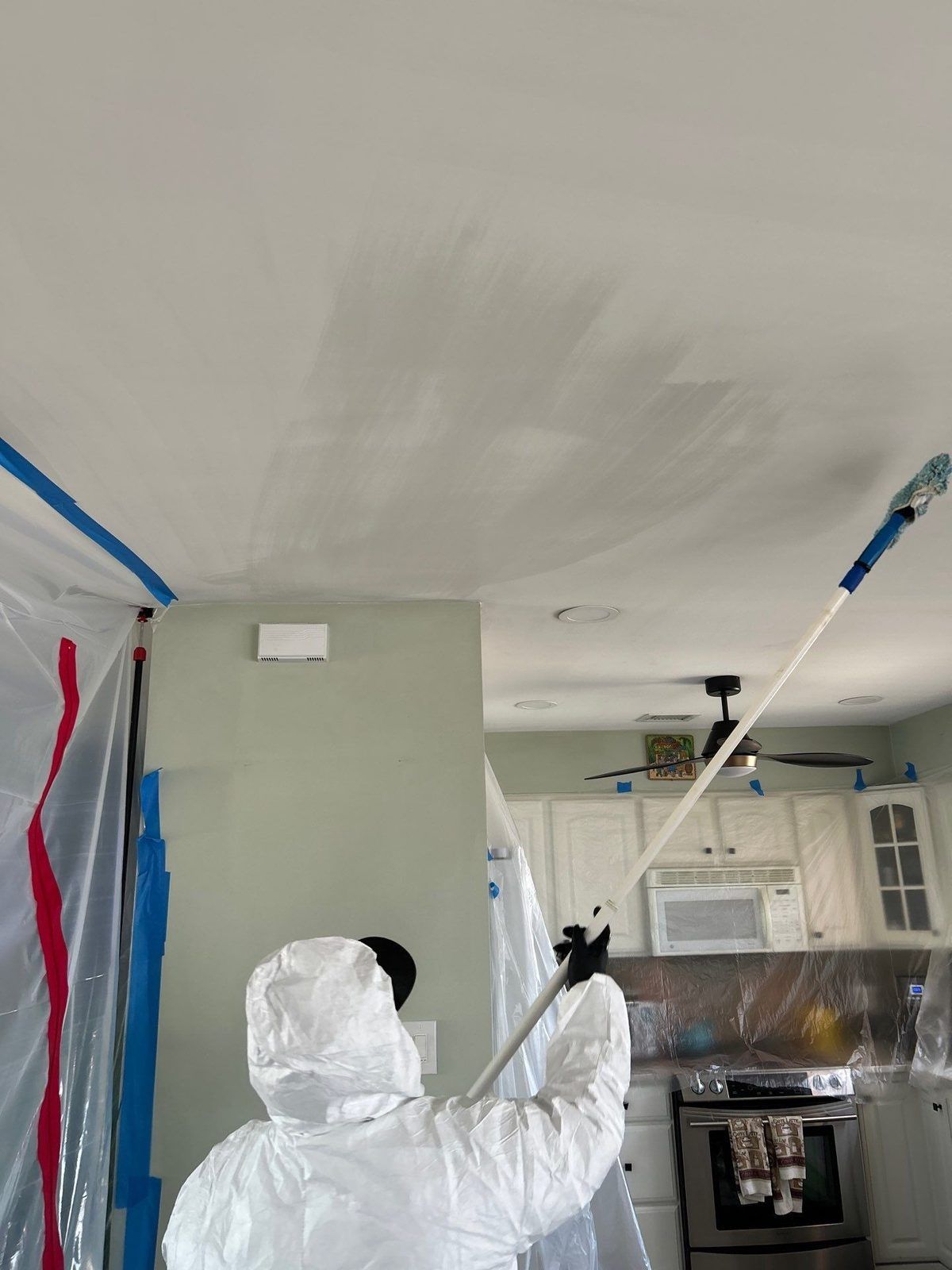
A puff-back happens when an oil burner (or, less often, a gas burner) doesn't light right away. Fuel vapor builds up in the combustion chamber, then ignites all at once with a "puff" that blows soot out of the furnace or boiler. Sometimes you hear a bang. Other times you only notice black smudges, cobwebs that look like dark strings, or a film on walls and furniture days later. Puff-back soot is oily and sticky, it spreads through ductwork and air currents, and the wrong cleaning method can set it in permanently.
Need help right now? Call or text MaxClean Restoration at 732-539-2942 · Text us Open 24/7 and usually on site within an hour in Monmouth, Ocean and Middlesex counties.

Safety first
- Turn off the furnace or boiler at its emergency shutoff switch (often a red switch at the top of the basement stairs or on the unit). Don't turn it back on until a licensed heating technician has inspected and repaired it.
- Smell gas or oil fumes, or see smoke? Get everyone out and call 911 or your fuel company from outside.
- Check your carbon monoxide alarms. If one goes off, leave the house and call 911.
- Keep kids, pets and anyone with asthma or breathing problems away from sooty areas.
- Plan for heat. If it's cold, use safe, listed space heaters away from anything that can burn. Never use a grill, generator or oven to heat the house.
What to do right now
- Call a licensed heating technician or your oil company to inspect and repair the burner.
- Close doors to rooms that don't have soot yet, to keep it contained.
- Take photos and video of the furnace and every room with soot before anything is touched: walls, ceilings, vents, carpets, furniture and belongings.
- Keep foot traffic down. Soot tracks easily onto clean carpets and floors.
- Call MaxClean at 732-539-2942 for soot cleanup. We're open 24/7 and usually on site within an hour.
- Report it to your insurance company and write down the claim number.
What NOT to do
- Don't wipe walls, ceilings or furniture with water or household cleaners. Puff-back soot is oily and smears into a permanent stain.
- Don't vacuum soot with a regular household vacuum. It blows fine particles right back into the air.
- Don't run the furnace or the HVAC fan, which pushes soot through every duct in the house.
- Don't wash sooty clothes or linens in your washing machine before talking to us. Oily soot can set in and spread to other loads.
- Don't throw belongings away before they've been photographed and looked at. Many items can be cleaned.
What MaxClean does
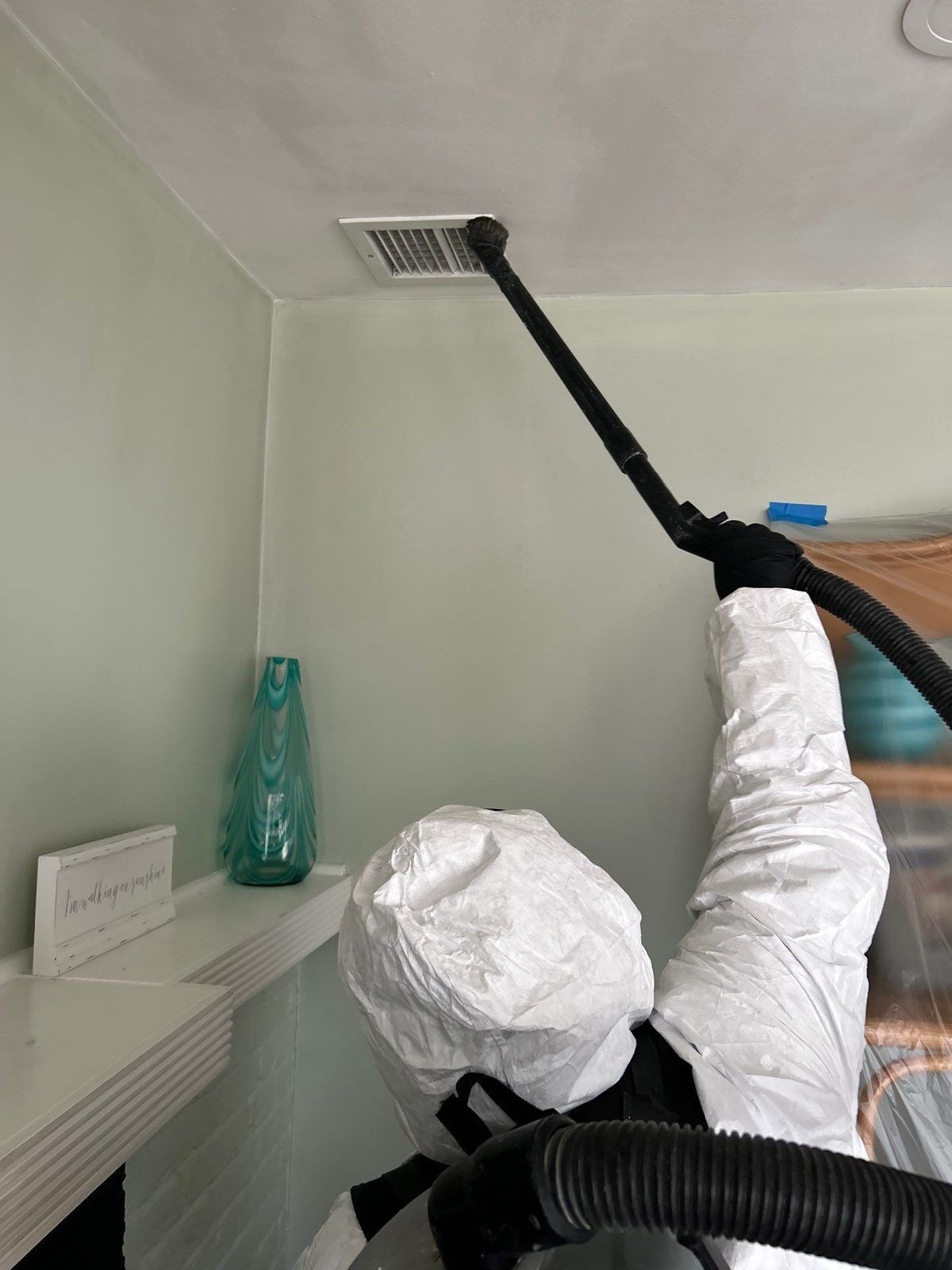
- Inspects every room and the ductwork, because puff-back soot often travels farther than it looks.
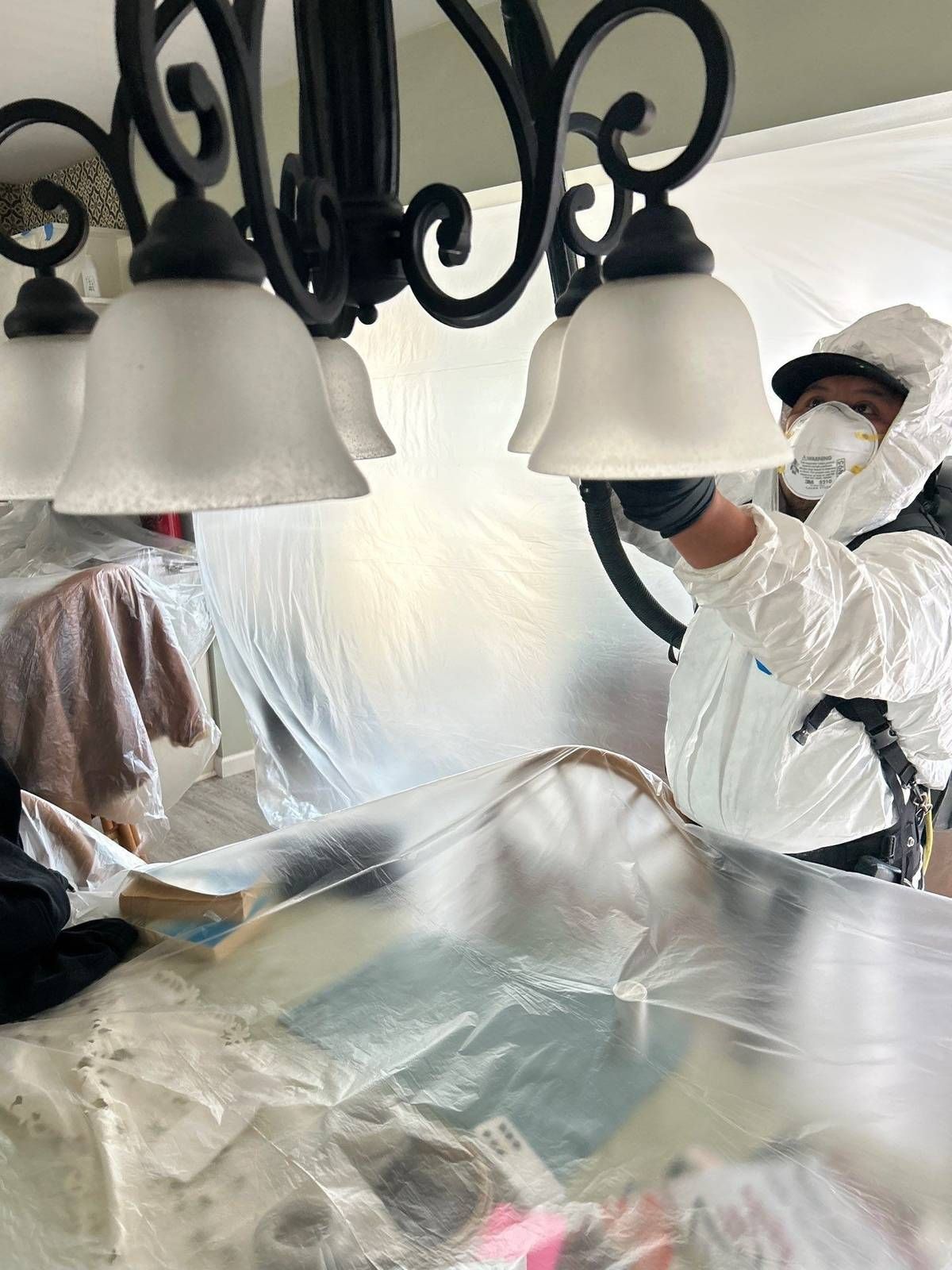
- Contains the soot and runs HEPA air scrubbers to capture fine particles in the air.
- Cleans from the top down: ceilings, walls, trim, light fixtures, windows and floors, using dry-cleaning sponges first and then the right cleaners for oily residue.
- Cleans the HVAC system and ducts when soot got into them, so it isn't blown back out when the heat comes on.
- Cleans your belongings, including furniture, electronics, clothing and keepsakes, on site or at our facility.
- Removes the odor with professional deodorization, not masking sprays.
- Repaints and refinishes surfaces that can't be fully restored by cleaning. See what to expect during reconstruction.
- Documents everything with photos for your claim.
Learn more on our furnace puff-back cleanup page.
Working with your insurance
We work directly with your insurance company and send the invoice to your carrier for you; you're responsible for your deductible and anything your policy doesn't cover.
In New Jersey, homeowners usually have the right to choose their own restoration contractor. We specialize in working with both homeowners and insurance companies to make sure the work is properly documented and covered, so your home gets back to its pre-loss condition.
For general steps to follow after any loss, see the insurance claim process, step by step or our insurance claims page.
When to call a professional
- You see black film, smudges or dark "cobwebs" on walls, ceilings or around vents.
- More than one room is affected, or soot came out of the vents.
- There's an oily or burnt-fuel smell in the house.
- Carpets, upholstery, drapes or clothing have soot on them.
- You're not sure whether soot got into the ductwork.
Printable checklist
Furnace Puff-Back: Checklist
- ☐ Furnace or boiler turned off at the emergency switch
- ☐ CO alarms checked
- ☐ Heating technician or oil company called
- ☐ Doors to clean rooms closed
- ☐ Photos and video taken before any cleaning
- ☐ Soot left alone (no wiping, no household vacuum)
- ☐ Restoration company called
- ☐ Insurance notified and claim number written down
- ☐ MaxClean Restoration 24/7: 732-539-2942
Frequently asked questions
What does a furnace puff-back look like? Black or dark gray film on walls and ceilings, smudges around vents and light fixtures, dark stringy "cobwebs" in corners, and soot on window sills and furniture. It often looks worse near the furnace and around heating vents.
Is puff-back soot harmful? Soot is made of fine particles that can irritate the lungs, eyes and skin, especially for children and people with asthma. Keep people out of sooty areas until it's cleaned properly.
Can I clean puff-back soot myself? A very small smudge right next to the furnace may be manageable, but in most cases we don't recommend it. Puff-back soot is oily, and wiping it with water or household cleaners smears it into the surface and can set the stain for good.
Do the air ducts need cleaning after a puff-back? Often, yes. If soot came out of the vents or the system was running when it happened, the ducts likely hold soot that will blow back into the house when the heat comes on. We inspect the system as part of the job.
What causes a puff-back? Usually a delayed ignition in an oil burner caused by a clogged nozzle, a dirty burner, a faulty ignition part or a blocked chimney or flue. Yearly service by a licensed technician is the best prevention.
Need help right now? Call or text MaxClean Restoration at 732-539-2942 · Text us Open 24/7 and usually on site within an hour in Monmouth, Ocean and Middlesex counties.
Related guides: After a house fire · Smoke or soot from a neighbor's fire · The insurance claim process, step by step · All guides
MaxClean Restoration, 11 Bannard Street, Freehold, NJ · IICRC Certified Firm · NJ HIC #13VH12188600 Open 24/7 and usually on site within an hour across Monmouth, Ocean and Middlesex counties.