

Smoke or Soot From a Neighbor's Fire: What to Do
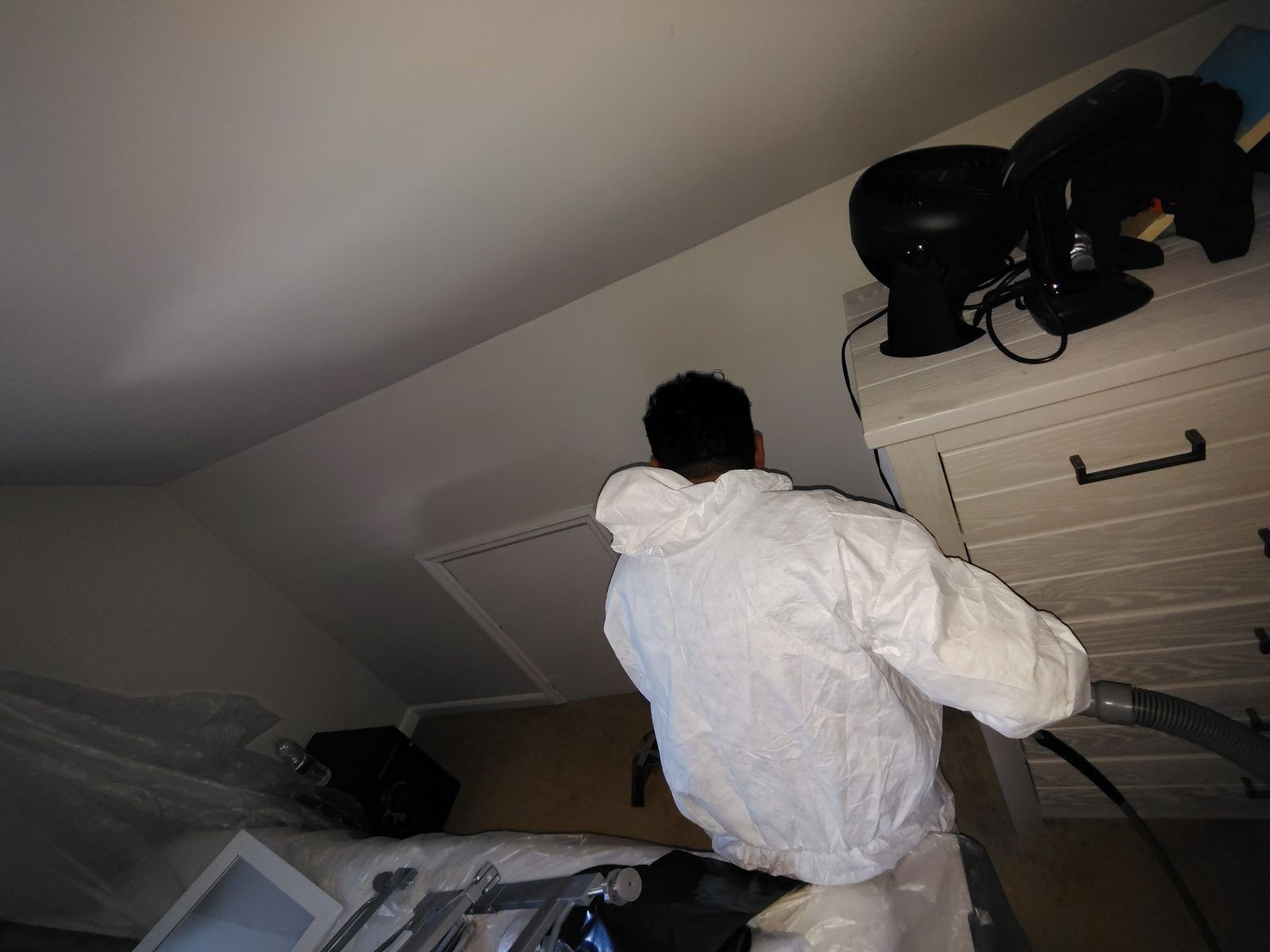
Your home doesn't have to burn to be damaged by fire. Smoke from a house fire next door, a fire in an attached townhome or condo unit, or a nearby brush or building fire can push soot and odor into your home through windows, vents, attics, shared walls and gaps you'd never notice. Smoke residue is acidic, so it can keep staining and corroding surfaces, and the smell often gets worse on humid days. Here's what to do.
Need help right now? Call or text MaxClean Restoration at 732-539-2942 · Text us Open 24/7 and usually on site within an hour in Monmouth, Ocean and Middlesex counties.
Safety first
- Wait until the fire department says your home is safe to go back into, especially if you share a wall, roof or attic with the burned building.
- Check for heat, water and smoke coming through shared walls or ceilings. Firefighting water often runs into neighboring units.
- Protect your lungs. People with asthma, heart or lung conditions, older adults, children and pets are most sensitive to smoke particles. Keep them out of smoky rooms.
- Don't eat food that was left out or stored where smoke got in, and toss any food or medicine that was exposed to heat or smoke.
What to do right now
- Close windows and doors to keep more smoke out while the neighboring fire is still smoldering or being cleaned up.
- Switch the HVAC system off until we've checked it, so soot in the ducts doesn't spread to every room. If you must run heat or A/C, change the filter first and again after a few days.
- Take photos and video of soot on walls, window sills, vents, siding, cars and outdoor furniture, and note when and where you smell smoke.
- Write down what happened: the date, the address of the fire, and which fire department responded. Your insurance company may ask for it.
- Call your own insurance company to report it, and write down the claim number. Ask them how they want you to proceed.
- Call MaxClean at 732-539-2942 to inspect for smoke and soot. We're open 24/7 and usually on site within an hour.
What NOT to do
- Don't wipe soot off walls, ceilings or upholstery. Rubbing smears it into the surface and can set the stain.
- Don't use a regular household vacuum on soot. It blows fine particles back into the air.
- Don't cover the smell with air fresheners, candles or scented sprays. They mask odor for a few hours and don't remove it.
- Don't wash smoky clothes on hot or put them in the dryer before talking to us. Heat can set smoke odor.
- Don't throw away smoke-damaged belongings until they've been photographed.
What MaxClean does
- Inspects inside and out, including the attic, HVAC system, closets and shared walls, where smoke often hides.
- Tests surfaces to choose the right cleaning method for the type of residue.
- Runs HEPA air scrubbers to capture fine particles in the air.
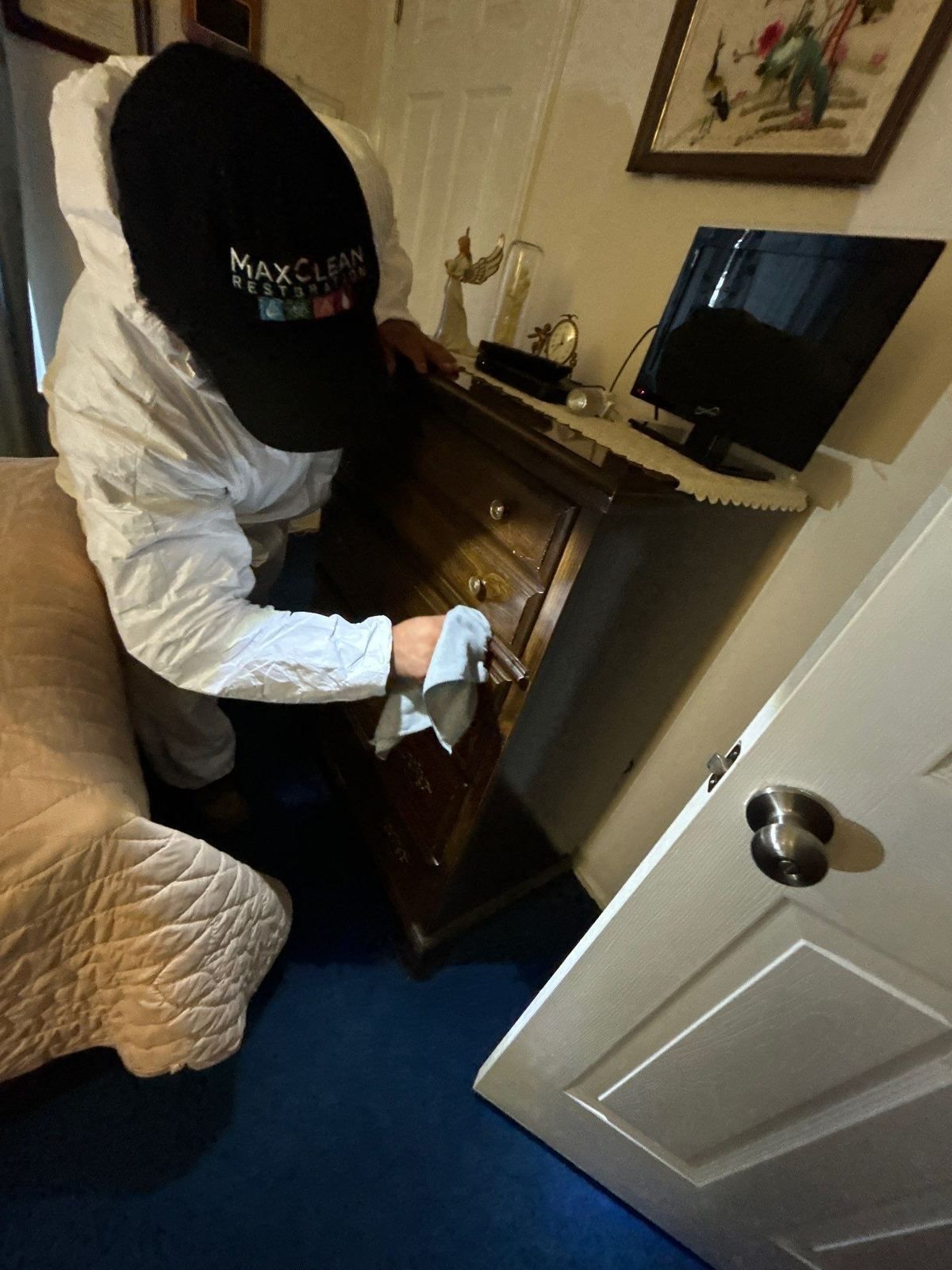
- Cleans surfaces from the top down, using dry-cleaning sponges first, then the right cleaners for the residue. We can also wash exterior siding, windows and decks.
- Cleans the HVAC system when smoke got into the ducts.
- Cleans your belongings, including clothing, drapes, furniture and electronics, on site or at our facility.
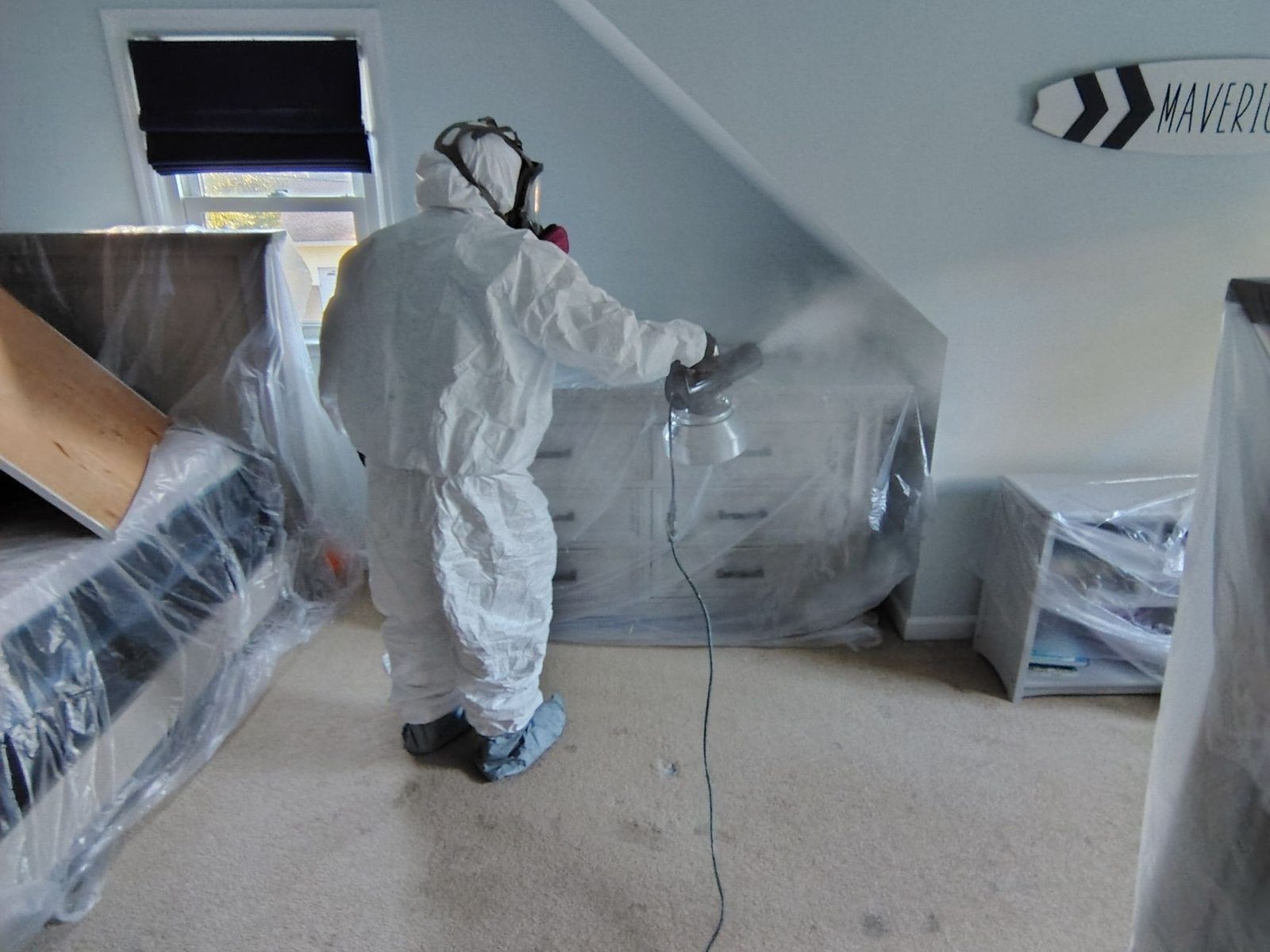
- Removes odor at the source with professional deodorization such as thermal fogging or hydroxyl treatment, after the residue is cleaned.
- Dries water damage if firefighting water came through a shared wall or ceiling.
- Documents everything with photos for your claim.
Learn more on our fire and smoke damage page.
Working with your insurance
We work directly with your insurance company and send the invoice to your carrier for you; you're responsible for your deductible and anything your policy doesn't cover.
In New Jersey, homeowners usually have the right to choose their own restoration contractor. We specialize in working with both homeowners and insurance companies to make sure the work is properly documented and covered, so your home gets back to its pre-loss condition.
For general steps to follow after any loss, see the insurance claim process, step by step or our insurance claims page.
When to call a professional
- You can still smell smoke a day after the fire is out.
- You see gray or black film on window sills, vents, walls or light fixtures.
- You share a wall, roof, attic or HVAC system with the building that burned.
- Water from firefighting came into your home.
- Clothing, drapes, bedding or furniture smell smoky.
Frequently asked questions
Can smoke really damage a house that didn't catch fire? Yes. Smoke carries fine soot particles and gases that settle on surfaces and soak into fabrics, drywall, insulation and wood. The residue is acidic and can discolor surfaces and corrode metal over time.
Will the smoke smell go away on its own? Usually not completely. Airing the house out helps a little, but odor sticks to soft materials and hidden surfaces and often comes back on hot or humid days. Professional cleaning followed by deodorization removes it at the source.
Should I call my own insurance company or my neighbor's? Start by reporting it to your own insurance company and asking how they want you to proceed. They can explain your options. We can't give legal advice, so if you have questions about who is responsible, ask your insurance agent or a qualified professional.
Do I need my air ducts cleaned after a nearby fire? If smoke got into your home while the system was running, or you smell smoke when the heat or A/C comes on, the ducts should be inspected. We check the HVAC system as part of every smoke inspection.
Can smoky clothes be saved? Most can. Professional cleaning removes smoke odor from most clothing and fabrics. Avoid hot washes and the dryer until then, because heat can set the odor.
Need help right now? Call or text MaxClean Restoration at 732-539-2942 · Text us Open 24/7 and usually on site within an hour in Monmouth, Ocean and Middlesex counties.
Related guides: After a house fire · Furnace puff-back · The insurance claim process, step by step · All guides
MaxClean Restoration, 11 Bannard Street, Freehold, NJ · IICRC Certified Firm · NJ HIC #13VH12188600 Open 24/7 and usually on site within an hour across Monmouth, Ocean and Middlesex counties.