

Frozen Pipe Burst Cleanup in Middletown, NJ
Quick answer: Turn the water off at the main, keep away from wet ceilings and outlets, and phone 732-539-2942 . We take calls 24/7 from every part of the township, from Leonardo and Belford down to Lincroft. IICRC Certified Firm #70028169 · NJ HIC #13VH12188600.
A pipe that freezes usually doesn't leak right away. The ice holds the crack shut, and the trouble starts when the weather warms up and the line thaws under full pressure. By then water may have been running into a ceiling, behind a vanity or across a basement floor for a while. In Middletown, where that pipe runs depends a lot on which part of town you live in and how old the house is.
Raised homes on the Bayshore
After Superstorm Sandy, roughly 350 Middletown houses had to be lifted or rebuilt, and the worst flooding hit Port Monmouth, Belford and Leonardo north of Route 36. Raising a house solves one problem and creates another one for winter. The water line now comes out of the ground and climbs through open air, a parking area or a storage enclosure before it reaches the heated floor above. FEMA's guide to elevated homes says plumbing exposed this way must be insulated against freezing, and that heat cable may be needed too. Insulation can be knocked loose, torn by things stored nearby or never finished, and an exposed riser is the part of the line most open to the cold. When it splits, water can run into the enclosure below, and if the break is higher up, into the subfloor and the rooms over it.
Old houses along Kings Highway and in Navesink
Middletown Village is one of the oldest English settlements in New Jersey. Its historic district holds 99 properties on Kings Highway, Red Hill Road and nearby streets, including Marlpit Hall, which dates to about 1762. The Navesink Historic District along Monmouth Avenue is mostly houses from the mid-to-late 1800s. Homes like these were built long before indoor plumbing, so their pipes were added later and can run through porches, kitchen additions and outside walls with little insulation. When one of those lines bursts, we try to keep original plaster, trim and wide-board floors wherever we can dry them in place, and only cut what's truly too wet to save.
Postwar ranches, splits and basements
According to the Census Bureau's 2024 American Community Survey, the median Middletown home was built in 1969, and more than a third were built before 1960. Many houses from those decades have plumbing in cold spots: supply lines near the sill plate, hose bibs that pass through the rim joist, and laundry or bathroom lines in a garage wall or crawl space. Those are the places where pipes tend to freeze. In finished basements around New Monmouth and Lincroft, the water can run under carpet and behind paneling before anyone sees it.
Your shutoff, the meter and the water company
Middletown's public water comes from New Jersey American Water. According to the company, it owns the meter and the curb stop at the street, but you're responsible for the line from the curb stop to the house and for keeping the meter protected from freezing. It also says it does not thaw frozen meters or service lines. So find your own main valve before winter. It's usually close to where the line comes in or next to the meter. If the leak is on the street side or at an outdoor meter pit, call the company's 24-hour emergency number, 1-800-272-1325. For a split pipe inside the house, a plumber makes the repair, and we handle the water damage.
Before our technicians arrive
- Close the main valve and open a low faucet to drain the lines.
- If a ceiling is sagging or water is near outlets or the panel, keep everyone out of that room.
- Don't use a torch or open flame on a frozen line. Warm air from a hair dryer, with the water off, is safer.
- Take photos of each wet room and of the broken pipe before anything gets thrown out.
- On a raised home, check the enclosure and any storage under the house. Wet cardboard boxes there can hide how far the water spread.
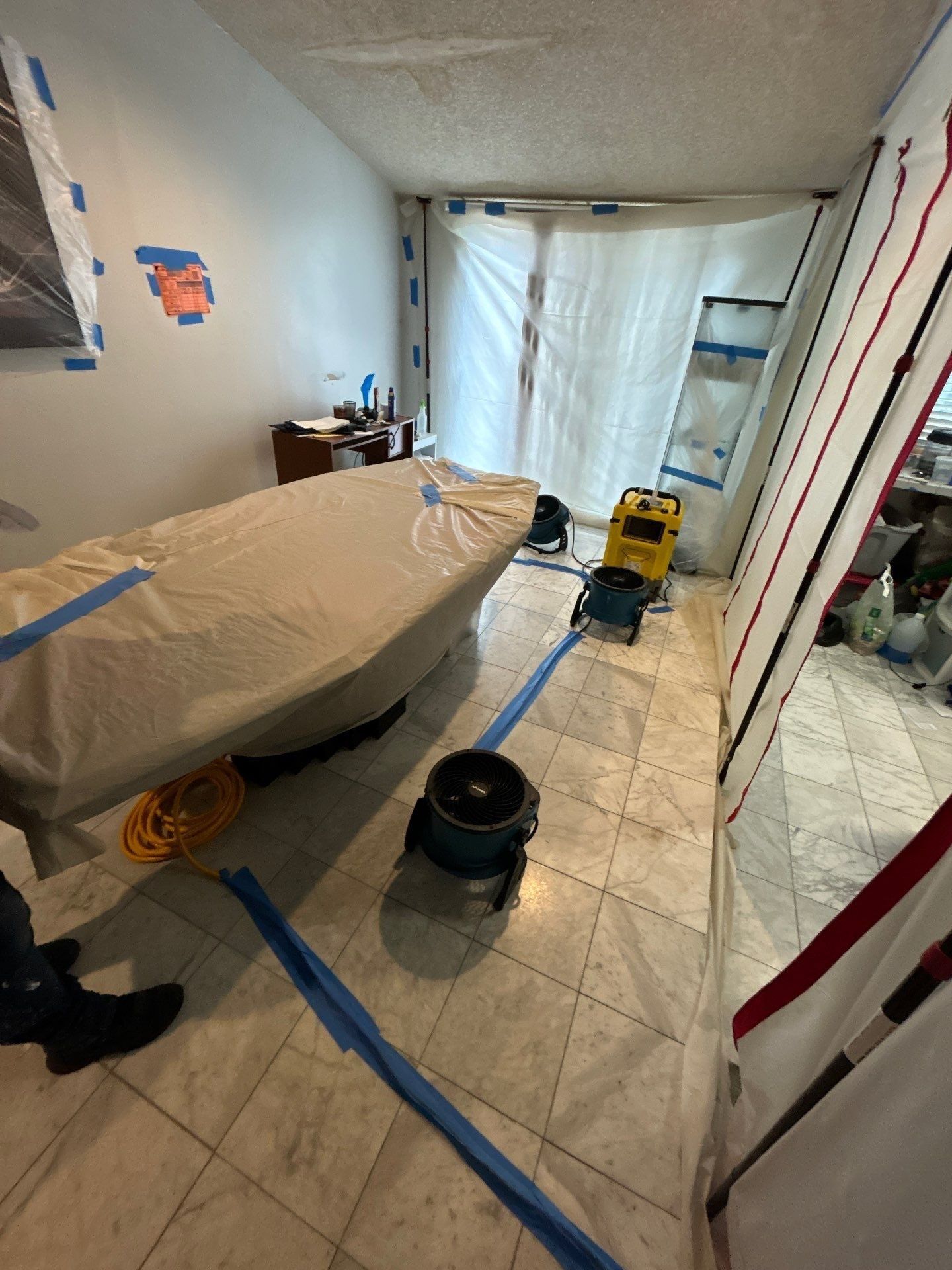
How we dry out a freeze break
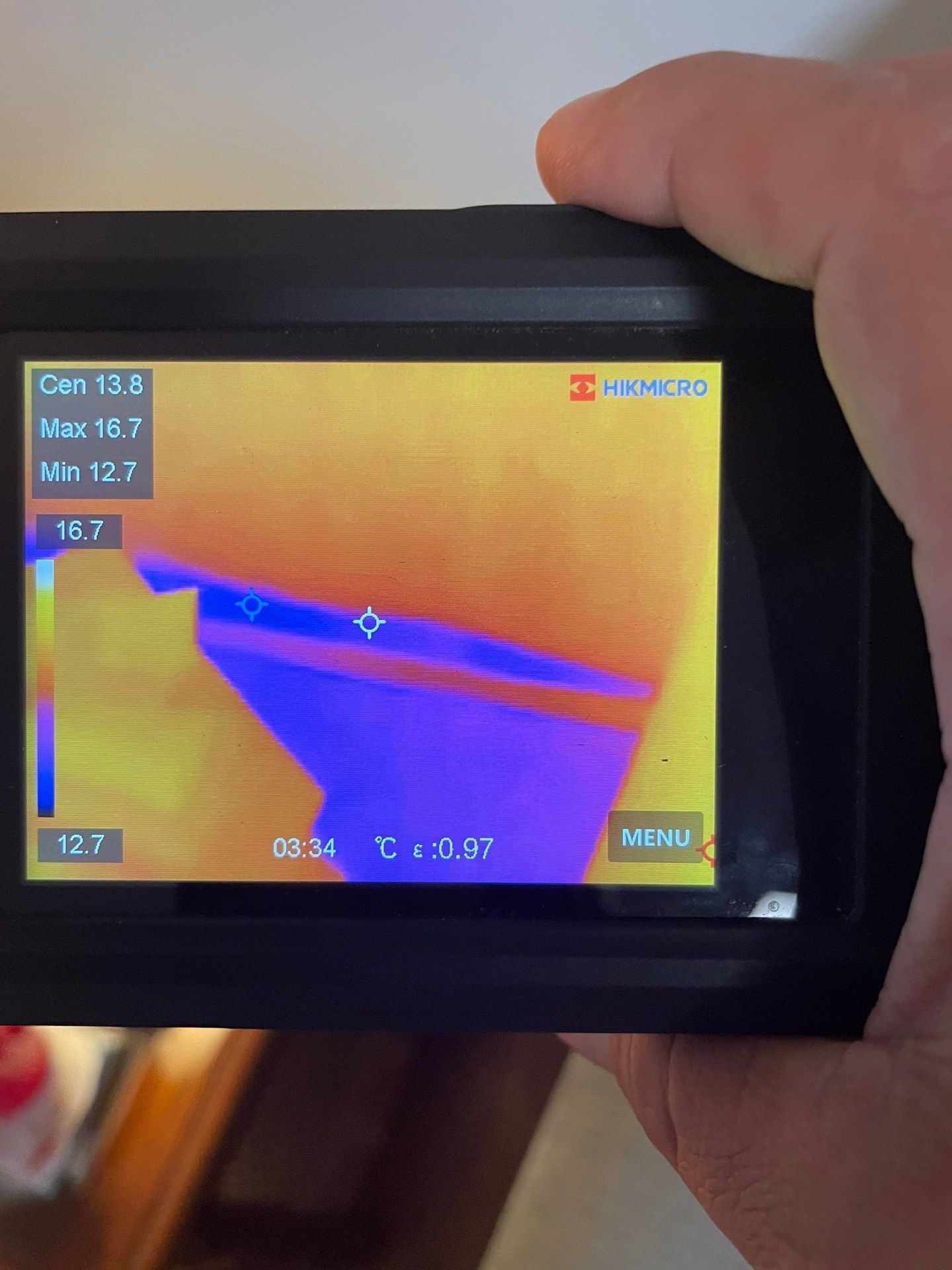
- Trace the water. Thawed water runs downhill and along joists, so we use meters and a thermal camera on every floor below the break, not only the room where the pipe split.
- Extract. We pull standing water out of carpet, pad and hard floors, and out of enclosures under raised homes.
- Open only what's needed. We remove wet insulation and drywall that won't dry in place, and we make small openings in ceilings to let air into the joist bays.
- Dry and record. Dehumidifiers and air movers stay in place while we take readings every day until the materials are back to normal.
- Put it back. Our reconstruction technicians replace drywall, insulation, trim and flooring once everything is dry.
Wet insulation or carpet pad that's left in place can start to grow mold. If you find a freeze leak weeks after it happened, read our Middletown mold remediation page.
Insurance for a freeze break
We work directly with your insurance company. That includes photos, moisture readings and an itemized invoice for your adjuster. Coverage depends on your policy and on what happened, for example whether heat was kept on in the house, so we can't promise what will be paid. A pipe failure inside the home is handled differently from bay or creek flooding, which is usually a separate flood-policy matter. Our insurance claims guide walks through the steps.
Middletown frozen pipe questions
The pipe under our raised house split, but nothing inside looks wet. Do we still need help? Possibly. Water can wick up into the subfloor and insulation under the first floor. We'll check with meters before you decide anything.
We were away and came home to water everywhere. Where do we start? Shut the main, take photos, and call us. Someone 18 or older needs to let our technicians in the first time.
Can you save the plaster in an older house? Often, if it's dried quickly and is still solid. We'll tell you what we think can stay and what can't.
Is a burst pipe the same as the water damage you handle after a storm? The drying is similar, but the cause and the insurance side are different. For storms and flooding, see water damage restoration in Middletown.
Call about a frozen pipe in Middletown
Call 732-539-2942 at any hour. More for Middletown: all Middletown restoration services · Middletown water damage · frozen pipes guide. Nearby: Holmdel, Hazlet, Red Bank and Atlantic Highlands.
MaxClean Restoration, 11 Bannard Street, Freehold, NJ 07728 · 732-539-2942
· IICRC Certified Firm #70028169 · NJ HIC #13VH12188600
Open 24/7 · Serving Monmouth, Ocean and Middlesex counties.
